


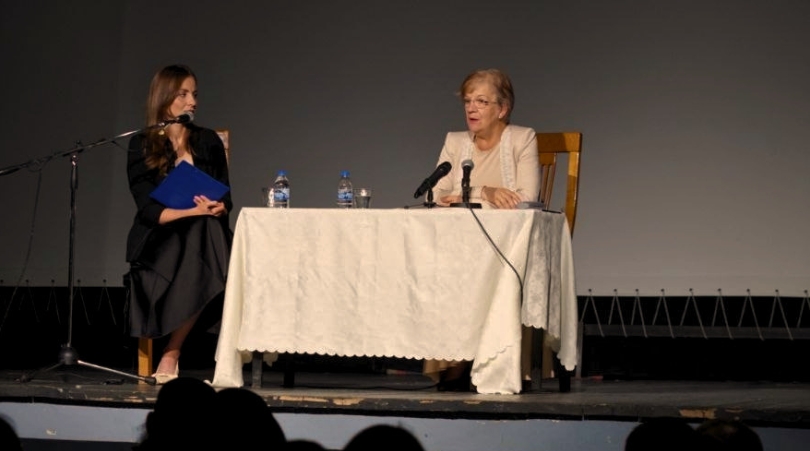
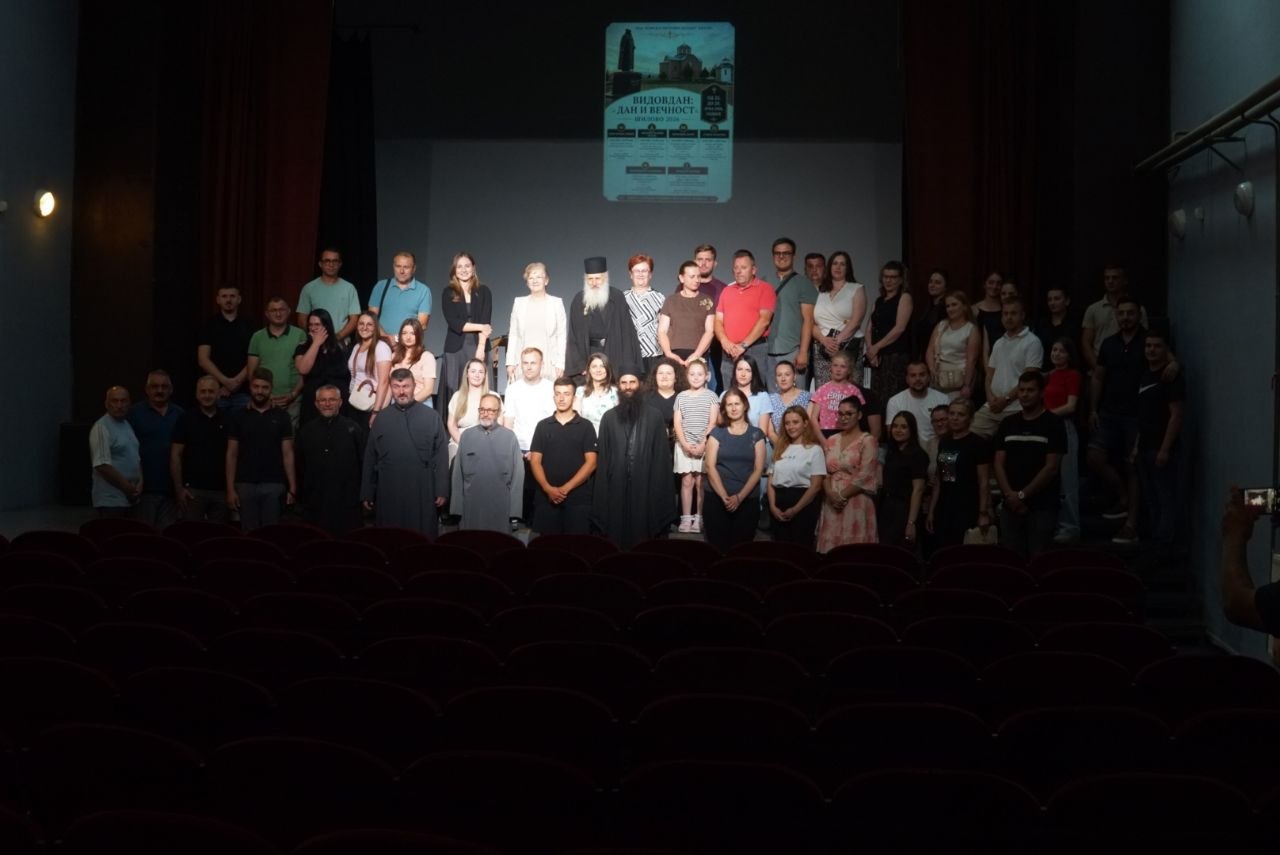
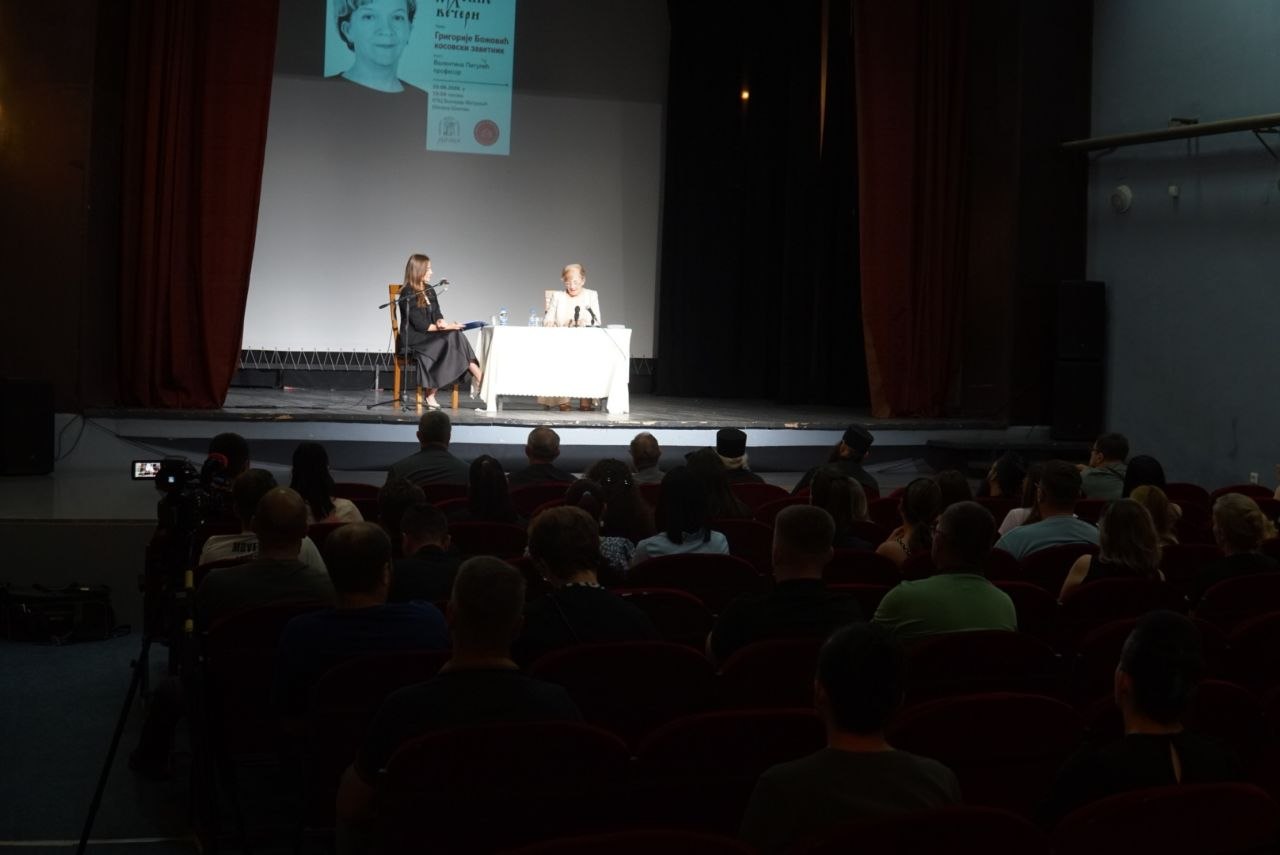
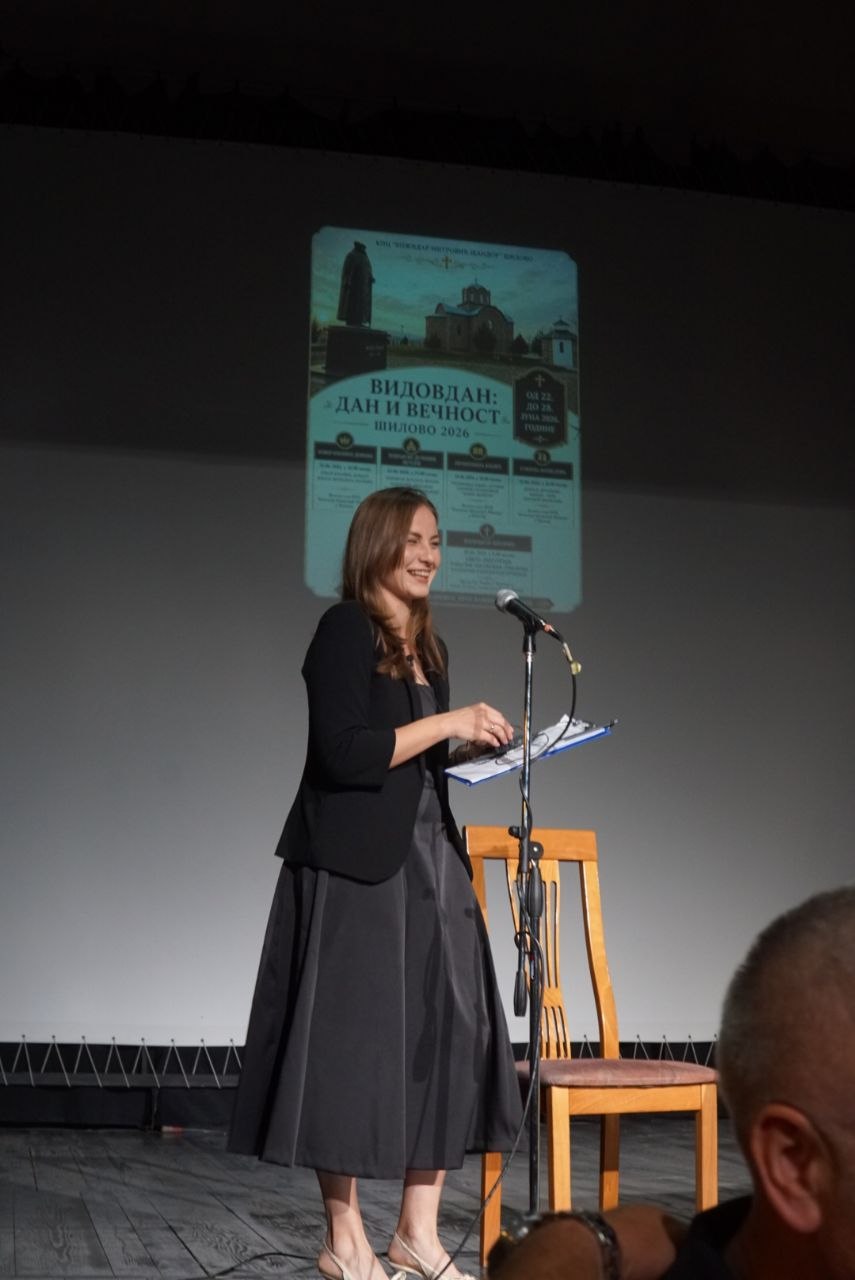
As part of the Vidovdan celebrations, another Morava Spiritual Evening was held on June 23 at the Božidar Mitrović Šandor Cultural Center in Šilovo. This time, the event was dedicated to Grigorije Božović, one of Serbia’s greatest writers, a witness to Old Serbia, and one of the most important literary interpreters of the Kosovo Covenant.
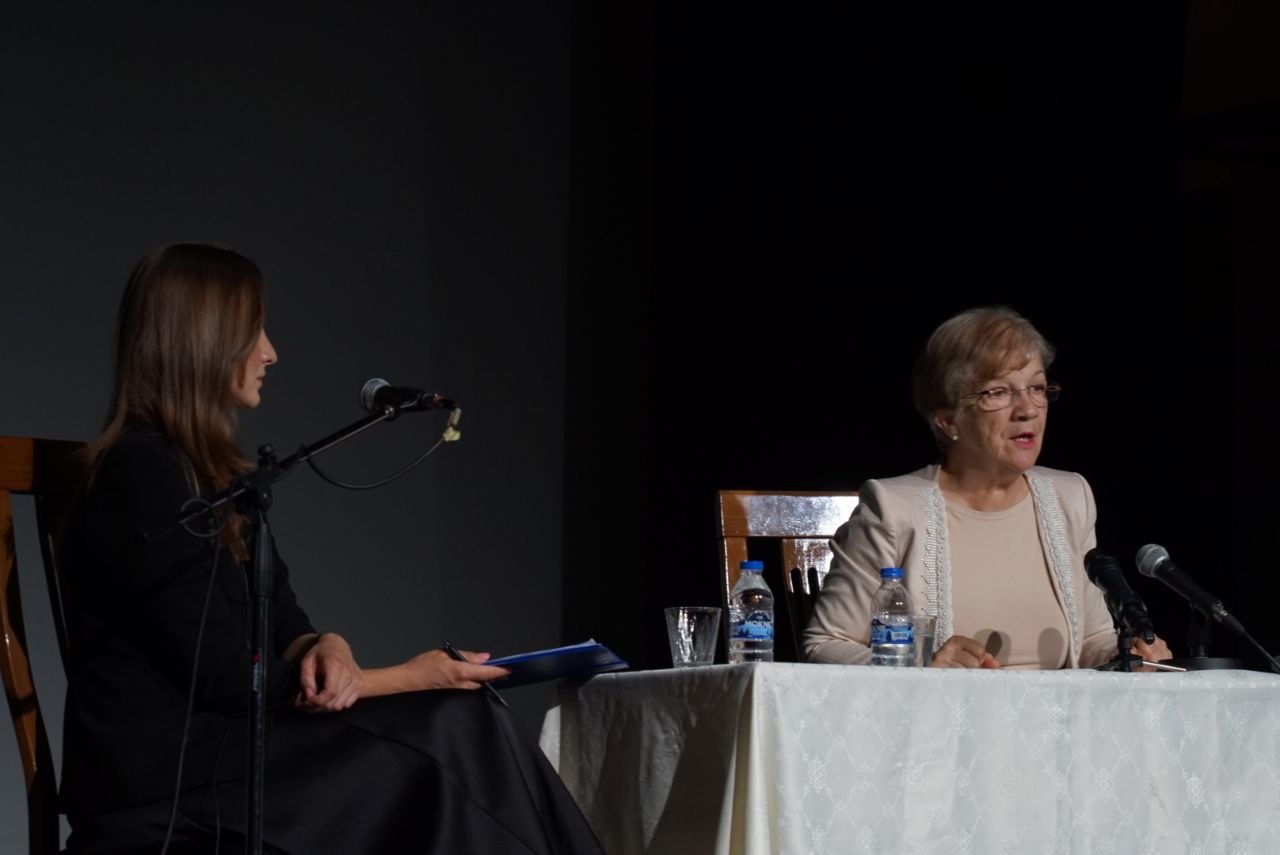
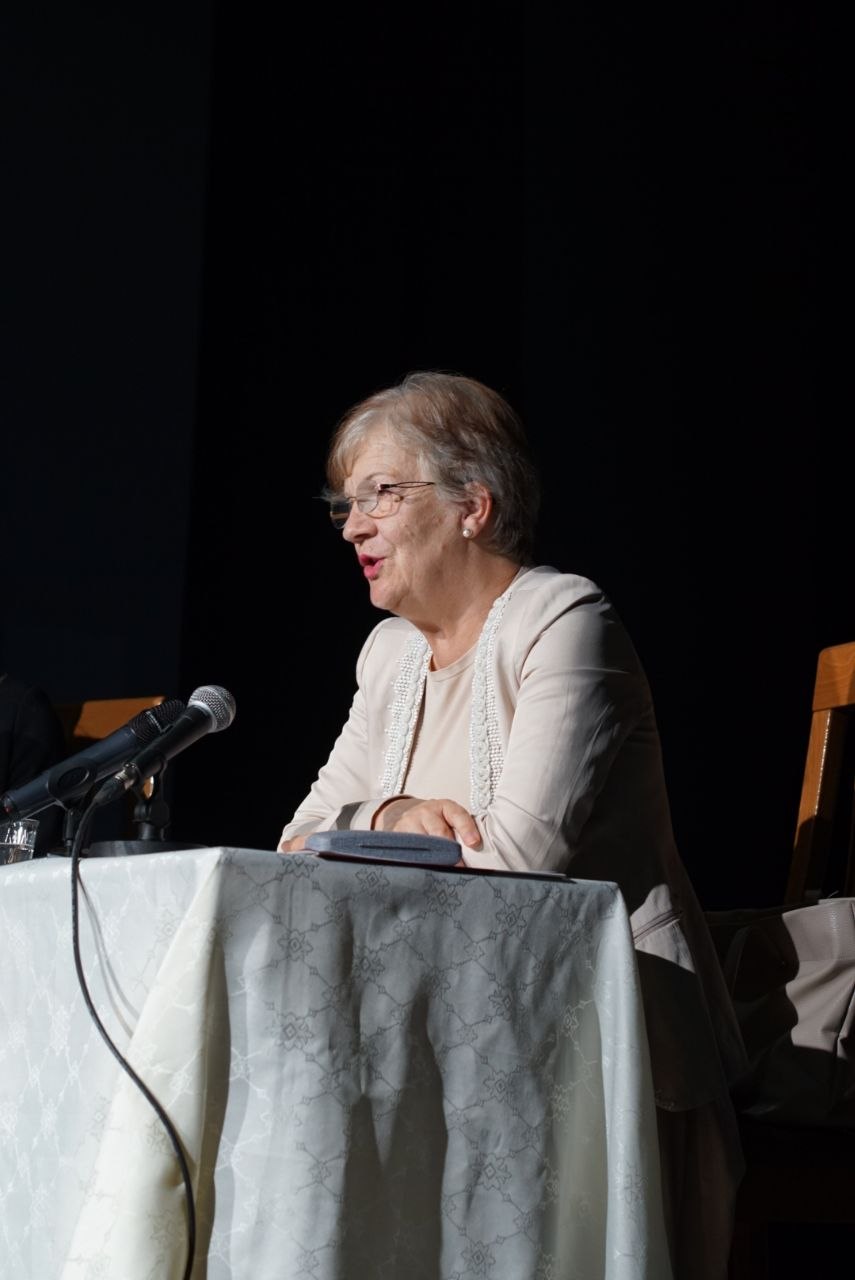
The evening’s guest speaker was Prof. Dr. Valentina Pitulić, a professor at the Faculty of Philosophy of the University of Priština, temporarily seated in Kosovska Mitrovica, and a professor of Serbian language and literature at the Prizren Orthodox Seminary.
Grigorije Božović – A Guardian of the Kosovo Covenant
The lecture, titled “Grigorije Božović – A Guardian of the Kosovo Covenant,” was organized by Draganac Monastery and the Kosovsko Pomoravlje humanitarian organization.
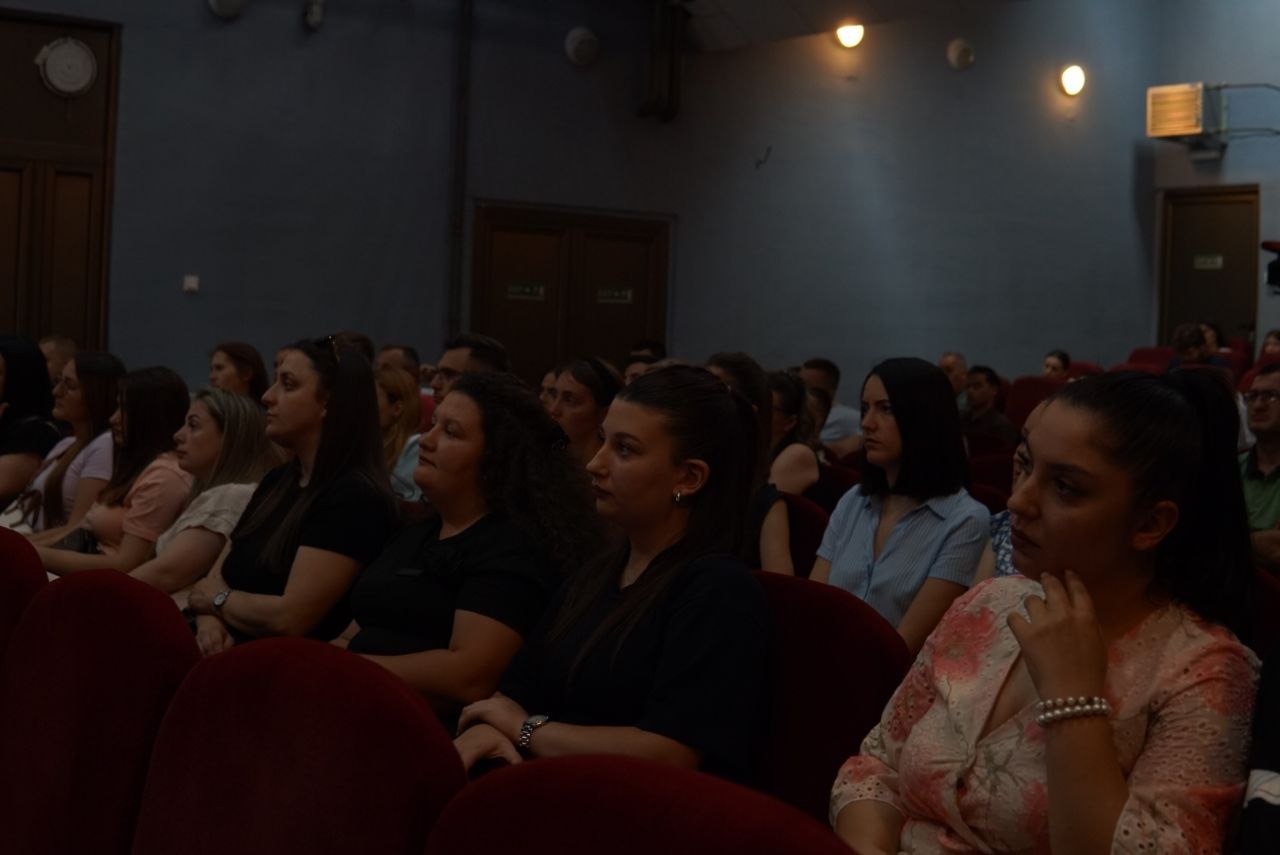
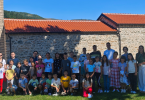
The discussion focused on a writer who remained overlooked in Serbian literature for many years, yet whose work is now being rediscovered as a precious testimony to Kosovo and Metohija, its people, faith, suffering, perseverance, and identity. The event attracted a large audience.
A Writer Who Listened to the People
Speaking about Grigorije Božović’s spiritual and literary development, Professor Pitulić reminded the audience that he was born in Ibarski Kolašin, into a family of priests. From his earliest childhood, he grew up surrounded by the sounds of the gusle, epic poetry, oral tradition, family celebrations, weddings, lament songs, and the everyday life of his homeland.
“He listened to the gusle, to stories of epic heroes, of Prince Marko, Miloš Obilić, Prince Lazar, of honor, courage, and the resistance of our glorious ancestors. Young Grigorije absorbed it all like a sponge, and those early experiences shaped the man he would become.”
It was emphasized that Božović was not only a writer but also a witness to a particular time and place. His work preserves vivid images of the lives of Serbs, Turks, and Albanians in Old Serbia, capturing the complexity of their relationships, fears, hopes, conflicts, honor, and hospitality.
“Grigorije Božović was a witness to his time. Had it not been for him, we might never have known how Serbs, Turks, and Albanians lived in the early twentieth century.”
Folklore, Tradition, and Collective Memory
A significant part of the discussion focused on the rich folklore preserved in Božović’s stories. Professor Pitulić pointed out that his writings contain an entire archive of traditional life, including customs, patron saint celebrations, village gatherings, songs, toasts, blessings, curses, oaths, legends, beliefs, traditional clothing, family relationships, and rituals.
“His stories contain an entire spectrum of folklore, so it is fair to say that he was also an ethnologist. He had a remarkable understanding of the ethnopsychology of our people.”
As explained during the lecture, Božović managed to preserve what is often the hardest to preserve the rhythm of everyday life, the way people spoke, their connection to the land, the family home, the church, the cemetery, and their ancestors. Through his stories, readers can see how families celebrated their patron saint’s day, how they gathered around the festive table, how young women joined the traditional dance for the first time, how funerals were conducted, how grief was expressed, and ultimately, how people endured.
“In Grigorije Božović’s work, we clearly see how the family patron saint’s day was celebrated, how toasts were offered, who led the household, and how families gathered. We also see what the great scholar Arnold van Gennep called the rites of passage: birth, marriage, and death.”
The Kosovo Covenant: To Stay or to Leave
One of the central themes of the evening was the timeless question that continues to resonate in Kosovo and Metohija today: Should one stay or leave?
Professor Pitulić reflected on Božović’s portrayal of Old Serbia and his ability to depict the diverse personalities of its people—from the proud inhabitants of Kolašin to the people of the Morava region, who, as she explained, found it harder to leave their homeland and were willing to endure hardship in order to remain.
“All of his characters struggle with the same question: What should we do? The oppression was so severe that people saw only two choices—to stay or to leave.”
One of the most powerful examples is the character Mojsil Zlatanović from the story “The Knight Without Fear or Flaw.” He refuses to sell his land because, for him, it is not property but a sacred promise, a mother, and a responsibility toward the Serbia he hopes will one day return.
“The land is his mother. It holds him with a mysterious blessing. He is ready to water it with his own blood and the blood of his children. Whoever survives will remain there to welcome Serbia.”
Through characters like him, Božović reveals that the Kosovo Covenant is not merely an abstract ideal but a daily decision—to remain faithful to one’s home, land, ancestors, and memory.
Saint Sava, Freedom, and Hope
Part of the discussion was devoted to Božović’s understanding of Saint Sava. Professor Pitulić explained that Božović saw him as a figure who united spirituality, education, practical wisdom, statesmanship, and deep care for his people.
“For him, Saint Sava stood above all our great historical figures. He saw him not only as a theologian but also as a teacher of the people, an educator, an organizer, and the first Serbian writer.”
When asked where she finds hope today, Professor Pitulić closed the evening with words that deeply moved the audience. She said she finds hope in young people, in children who continue to be born, and in the elderly who have chosen to stay. She sees it in the family patron saint’s celebration, in the candle, the ceremonial bread, conversations, shared joy, and in the determination to remain where one’s ancestors once lived.
“I find hope in these young people who, despite everything, still rejoice in life. I find hope in the elderly who stayed. I find hope in the children who continue to be born.
Let us not be sad because we live here. Let us be proud that we are here.
If we stop hoping, Kosovo will no longer be ours. If we do not love it more than anyone else does, it will not be ours. I believe Kosovo will belong to us only as much as we are willing to love it and sacrifice ourselves for it.”
A Writer Yet to Be Fully Discovered
The discussion concluded with the message that Grigorije Božović is a writer whose work has yet to receive the recognition it truly deserves. His stories are more than literature—they are valuable testimonies about people, faith, language, identity, fear, hope, and human dignity.
“He was an ethnologist, a writer, a linguist, an ethnopsychologist, and a sociologist. Researchers from many different fields will continue to turn to Grigorije Božović to better understand the people of Old Serbia.”
The Morava Spiritual Evening dedicated to Grigorije Božović reminded everyone that discussing literature is never only about the past. It is also about understanding who we are, what we remember, what we have inherited, and what we are called to preserve.
Grigorije Božović remains the writer of Kosovo and Metohija, the writer of Old Serbia, and the writer of the Kosovo Covenant. More importantly, he continues to ask us an enduring question: Do we still have the strength to remain worthy of our land, our ancestors, and the words they entrusted to us?
A recording of the lecture will be available on our channel soon!
Support Our Work:
Monthly (ongoing) subscription
Help us continue our humanitarian work and support families in Kosovo and Metohija. By choosing a monthly donation, you become part of our everyday mission to provide hope and assistance to those who need it most. Subscribe.
Make a One-Time Donation
If you would like to support our work without committing to a monthly donation, you can make a one-time contribution and directly support our humanitarian projects. Donations.












Оставите коментар