


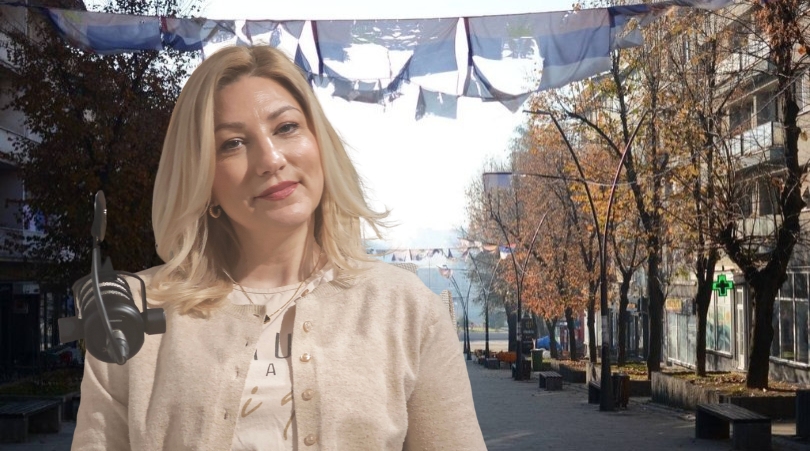
What is life like in northern Kosovo and Metohija when a burst of gunfire echoes through the streets just as a child is leaving kindergarten? In the podcast “How Is It Down There?”, Marija Orović Jovanović from Zvečan, better known as Maxi Travelet, shared her experience of living in such circumstances.
For years, Marija posted content on social media about travel, fashion, and everyday life. Over time, however, she realized that people were especially interested in the simplest images from Kosovo and Metohija it’s streets, shops, town squares, village roads, and the everyday life that continues despite all challenges.
“I realized that, in a way, I had become their source of information from Kosovo, as absurd as that may sound,” says Marija.
The everyday reality many never see
According to Marija, one of the biggest problems is that many people simply do not know what life for Serbs in Kosovo and Metohija actually looks like.
“We literally have no bank and no post office. We have to travel and wait at administrative crossings for hours just to collect our salaries.”
She especially remembers elderly people from Velika Hoča whom she met at a bank in Raška. They had left home at four in the morning, traveled for hours, changed transportation several times, waited at the crossing, and then stood in line at the bank.
“There are many stories like that. Unfortunately, the system has completely failed us, and we live the only way we can—we adapt and find ways to cope.”
Gunfire as a child leaves kindergarten
Speaking about life in Zvečan, Marija described a situation no one can ever truly get used to.
“There was shooting in the street below the kindergarten. My sister had gone to pick up her child. At that very moment, a burst of gunfire rang out—several bursts—and my child was walking out of the kindergarten.”
Yet life goes on. Children continue attending kindergarten and school, parents go to work, and families do their best to maintain a normal daily routine.
“I’m not saying we’ve become indifferent, but we simply live with these events and behave as though such situations are part of everyday life.”
Education and Healthcare as a matter of survival
For Serbian families in Kosovo and Metohija, education and healthcare are more than institutions—they are pillars of survival.
“If we lose those, then we as Serbs, and our children, will have no reason to stay here.”
As a mother, Marija worries most about the future of schools, education, diplomas, and the opportunities available to children.
“We are all stuck in a kind of limbo, waiting to see what will happen. I think many people are tired of waiting.”
A waiting game that has lasted for decades
“When I was in high school, my parents would say, ‘We don’t know what tomorrow will bring.’ Later, I found myself saying the same thing. Should we renovate the house? I don’t know what tomorrow will bring. That uncertainty has been with us for twenty-five years.”
People live here
Although she speaks openly about difficult topics, Marija does not want life for Serbs in Kosovo and Metohija to be reduced solely to fear, politics, and crises.
People live here who want ordinary lives. They have families, jobs, interests, hobbies, dreams, and plans. They want to work, travel, create, raise children, and remain in their homes.
“I would love to see the perception of Serbs living in Kosovo change. There are many young, talented, educated people here who have so much to offer.”
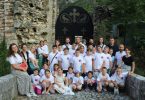
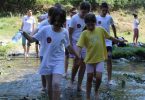
That is why it is important to talk about positive examples as well—young people, sports, culture, monasteries, families, and visitors who come to Kosovo and Metohija, meet its people, and leave with a different perspective.
“When Kosovo is mentioned, people immediately think of dark topics, problems, and politics. But there are other stories too, and those stories deserve to be heard.”
Come and see for yourself
When asked what people can do to help, Marija’s answer is simple:
“Come. Visit Kosovo. Visit the monasteries, come meet the people. It is completely normal to come here.”
The question “how is it down there?” does not have a simple answer. But the answer begins when we listen to the people who live here—their stories, fears, struggles, and hope that life in Kosovo and Metohija will not be forgotten.
Watch the full episode on our channel.
You Can Support Our Work in the Following Ways
Monthly (fixed) subscription
Support our initiatives and help families in Kosovo and Metohija. We invite you to join us in our mission to provide a dignified life for Serbs living in Kosovo and Metohija. Choose a monthly subscription and become part of our everyday work of. Subscribe
One-Time Donation
If you would like to support our work without committing to a monthly subscription, you can make a one-time donation and directly contribute to our humanitarian activities. DONATIONS









Оставите коментар