


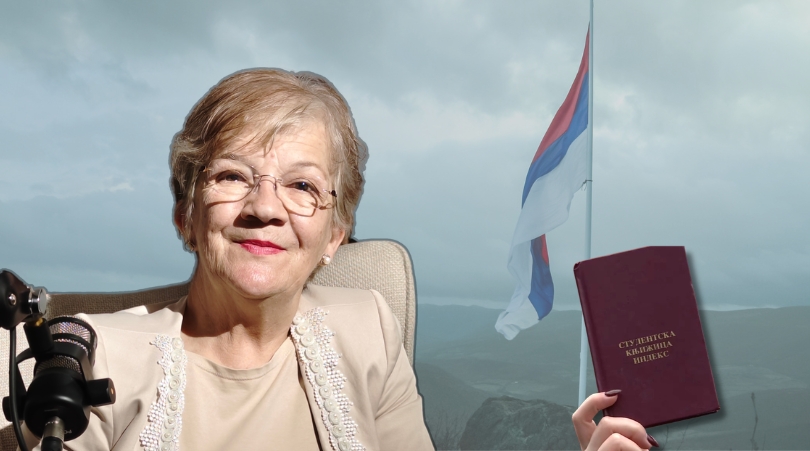
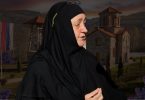
In the latest episode of the podcast How Is It Down There?, we spoke with Prof. Dr. Valentina Pitulić, professor at the Faculty of Philosophy of the University of Priština, temporarily based in Kosovska Mitrovica, and professor of Serbian Language and Literature at the Prizren Theological Seminary.
The conversation began with a question that Serbs from Kosovo and Metohija often hear when they travel outside their homeland: “How is it down there?“ From that simple question, we explored topics such as everyday life, the future of the University of Priština in Kosovska Mitrovica, the possibility of its integration into the Kosovo system, the responsibility of the academic community, Serbian folk literature, the legacy of Saint Sava, and the Kosovo Covenant.
Prof. Pitulić explains that it is often difficult to describe the everyday reality of Serbs living in Kosovo and Metohija to those who have never experienced it themselves.
“We have grown tired of explaining what it’s like down there. I usually say just one sentence: It’s hard for us, but I hope it will get better. This is the moment when we must endure.”
Yet, despite all the hardships, life in Kosovo and Metohija is, for her, not only a story of suffering. It is also a story of hope, personal growth, and the light that remains even in the darkest moments.
“Our story is difficult. At first glance, it may seem discouraging, but it is also a story that opens new horizons. It is a story filled with hope.”
The University as the Last Line of Defense
One of the central topics of the conversation was the position of the University of Priština, temporarily based in Kosovska Mitrovica. Prof. Pitulić reminds us that after being relocated from Priština, the University played a crucial role in preserving Serbian life in Kosovska Mitrovica.
“Kosovska Mitrovica was an empty town until the University arrived.”
The University brought students, young people, academic research, cultural life, and a sense that the Serbian community in Kosovo and Metohija still has a future. For this reason, its survival is about much more than education, diplomas, or accreditation.
“By defending the University, we defend our territorial integrity. By defending the University, we defend the Constitution of the Republic of Serbia. By defending the University, we defend the symbols of our state.”
According to Prof. Pitulić, integrating the University into the Kosovo system would mean severing its ties with the Republic of Serbia and placing it under Kosovo’s legal and educational framework.
“If the University were to fall as the last barrier and the final defense of our statehood, then we, as a state, would no longer exist in this territory.”
Silence Is Not the Answer
Prof. Pitulić places special emphasis on the responsibility of the academic community. At a time when one of the most important Serbian institutions in Kosovo and Metohija faces uncertainty, silence cannot be the answer.
“If there is one thing that hurts me in this situation, it is the silence. It hurts to see people looking away from the problem. It hurts to feel this atmosphere of ‘let’s not make waves.'”
She points out that throughout history, professors have often served as the conscience of society. Today, in times of fear and uncertainty, they must clearly define the boundaries that should never be crossed.
“These are times of ‘to be or not to be.’ History will ask us why we acted as we did, and why we failed to speak out against silence.”
According to Prof. Pitulić, Serbs in Kosovo and Metohija need a clear assurance that the University will remain within the educational system of the Republic of Serbia and will not be integrated into Kosovo’s institutions.
Folk Literature as the People’s Gospel
Another important part of the discussion focused on Serbian folk literature. For Prof. Dr. Valentina Pitulić, epic poetry, legends, proverbs, and fairy tales are much more than school lessons they are the spiritual map of a nation.
“Folk literature is our people’s Gospel, our treasure, our guide, our warning, our light in the darkness, our map that helps us find our way in the age of globalization, easy solutions, and easy betrayals.”
She explains that the Kosovo epic cycle presents three enduring models of human character: Prince Lazar as the saint, Vuk Branković as the traitor, and Miloš Obilić as the heroic martyr. Together, they offer timeless lessons for every generation.
“If you see Miloš Obilić as a metaphor for the hero who sacrifices himself, then each of us must be willing to make sacrifices. Without sacrifice, no goal can truly be achieved.”
She also highlights the wisdom of Mother Jevrosima, whose words from Serbian epic poetry remain a powerful lesson about justice and moral responsibility.
“My son, do not judge in favor of your relatives, but according to God’s true justice. It is better to lose your head than to lose your soul.”
Where Does Hope Come From?
Although the conversation addressed many difficult issues, it concluded with a message of hope. Prof. Pitulić believes hope lives in young people, education, those who choose to stay, family celebrations, weddings, traditional toasts, schools, and customs that continue to thrive in Kosovo and Metohija.
“The way people celebrate their family patron saint’s day and weddings in Kosovo and Metohija that is our last expression of true dignity.”
She especially highlighted Kosovo Pomoravlje as a region where traditions, strong family values, and respect for heritage continue to be preserved.
“Protect your ancestral land, because the one who preserves their heritage has never truly lost their way.”
The conversation with Prof. Dr. Valentina Pitulić showed that the future of the University in Kosovska Mitrovica is about far more than education. It is a question of identity, statehood, the future, and the right of Serbs to live, study, create, and remain in Kosovo and Metohija.
The last line of defense is not merely a building, a diploma, or an institution. It is the people who refuse to remain silent. The professors who stay. The students who continue to come. The parents. A nation that refuses to let its spirit and its voice be taken away.
You can watch the full conversation with Prof. Dr. Valentina Pitulić on our YouTube channel.
Support Our Work
Monthly Donation
Support our humanitarian work and help families across Kosovo and Metohija. By becoming a monthly donor, you become part of our daily mission to provide hope and assistance to those who need it most. Subscribe
One-Time Donation
If you would like to support our work without committing to a monthly donation, you can make a one-time contribution and directly support our humanitarian initiatives. DONATIONS










Оставите коментар