


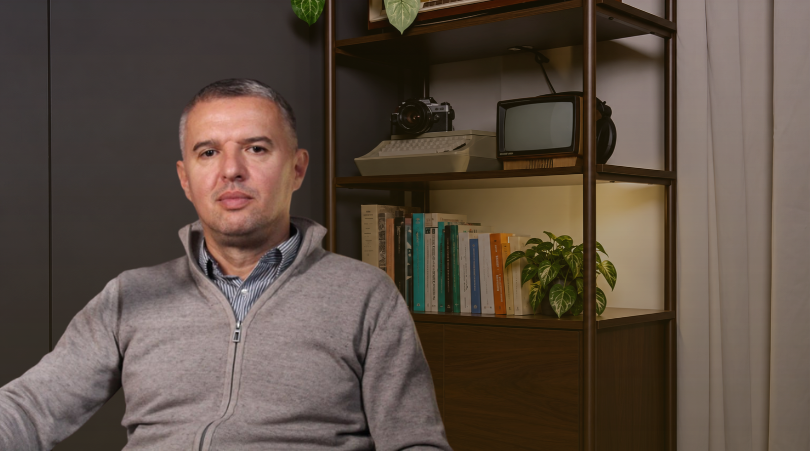
The Pristina Art Gallery, forced to leave its home city in 1999, returned to Kosovo and Metohija in 2021. Today, based in Gračanica, it brings together young artists, organizes exhibitions and art colonies, and helps preserve a cultural life that has continued despite all the challenges. Its director, Nebojša Jevtić, spoke about the Gallery’s work and mission in the podcast “How is it down there?”
A Gallery That Returned to Its People
After more than two decades of operating away from home, the Pristina Art Gallery once again opened its doors to the public in Kosovo and Metohija. Since returning to Gračanica, it has hosted exhibitions featuring works by Miloš Šobajić, Svetomir Arsić Basara, and other renowned artists, while also launching programs dedicated to new generations.
A special place in its activities is held by the art colonies “Autumn in Prizren” and “Vidovdan,” which bring together artists from different parts of the country and help build a new collection for the Gallery.
“Autumn in Prizren,” launched in 2015, has grown into an important artistic gathering. According to Jevtić, around 70 artists have taken part in the colony, creating approximately 150 paintings.
Others See Darkness, We Look for the Light
Speaking about young artists who live and create in Kosovo and Metohija, Jevtić shared an encounter with a French visitor who had seen an exhibition of young sculptors at the National Museum in Kruševac.
The visitor noticed an unusual sense of heaviness in their works and asked why all the sculptures seemed to convey so much darkness.
Jevtić explained the circumstances in which these young artists grow up: often isolated, without access to galleries, exhibitions, or regular opportunities to exchange experiences with fellow artists.
His silence and his peace are those black bars that he melts down, using them to reveal all the distortions of our lives.
he said this while describing the work of a young sculptor from the Kosovsko Pomoravlje region.
Yet art is not merely a reflection of a difficult life. It is also a way to rise above that reality, to create, and to leave something meaningful behind.
But Are There Really Sculptors in Kosovo?
One of the most memorable stories concerns an exhibition featuring ten young sculptors from Kosovo and Metohija, organized in Novi Sad in 2020.
During the exhibition, one visitor could hardly hide his surprise when he learned that the artists whose work was on display actually lived and created in Kosovo.
If a work of art or an event manages to spark the interest of even one person, we have succeeded. If that exhibition was meant for just one person, we have succeeded. We have won.
This encounter raised an important question: how much do we really know about the lives, talents, and creativity of Serbs in Kosovo and Metohija beyond the daily political headlines?
So That There Will Be Someone to Carry on After Us
Jevtić devoted particular attention to the young people employed at the Gallery. He pointed out that one of the institution’s greatest achievements is giving educated young professionals the opportunity to work in the fields they trained for, without having to leave Kosovo and Metohija.
None of this would have been possible without that main goal. And that goal is precisely to make sure someone remains after us to continue what we are doing.
Speaking about the responsibility of institutions, he stressed the importance of restoring professional standards and distinguishing between simply holding a position and actually doing the work.
We chose normality. We wanted art historians, painters, and graphic designers to work at the Gallery. We fought for that normality, and we are still fighting for it today.
Our conversation with Nebojša Jevtić reminded us that remaining in Kosovo and Metohija is about more than simply being physically present. It also means creating the conditions for a dignified life, professional opportunities, and a cultural heritage that future generations will be able to preserve.
Because the greatest achievement is not only what we have created, but also making sure that there are people who will carry it on after us.
Watch the full conversation with Nebojša Jevtić in the podcast „How is it down there?“.
Here are some ways you can support our work:
Monthly (Recurring) Subscription
Support our initiatives and help families in Kosovo and Metohija! We invite you to join us in the struggle for a dignified life for Serbs in Kosovo and Metohija.
Choose a monthly subscription and become part of our ongoing, day-to-day mission of support. Subscribe
One-Time Donation
If you would like to support our work without the commitment of a monthly subscription, you can make a one-time donation and directly assist our initiatives. DONATIONS









Оставите коментар