– Ouch! Only a tractor or an off-road vehicle can get through here…
– And a Mercedes! says Mica, our guide through Novo Brdo, locally known as Kriva Reka.
We all laughed nervously in the car at that comment. The dust behind us made the surroundings barely visible. Occasionally, a branch would hit the rearview mirror, revealing a small patch of forest before disappearing again as we emerged into a clearing. The forests here seem to have grown as needed, or perhaps everyone cut their own patch near their house. Today, only the trees remain where the houses once stood.
For more than a kilometer uphill, we hadn’t seen a single person. From the main road, it took us half an hour to reach this point. The car swayed like a boat, but at least it wasn’t as hot as the plains, even though it felt like we were directly under the sun.
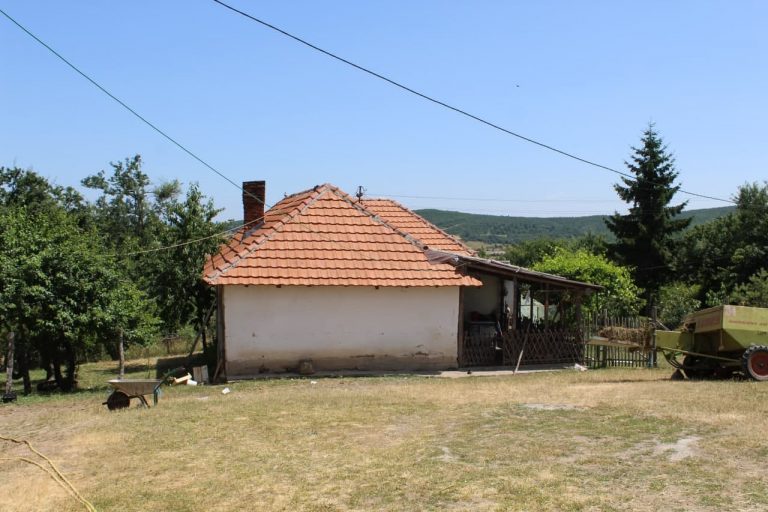
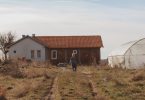
We slowly descended toward the Jović house, home of the last Serbs in Manuta, a hamlet of the village Zebince near Novo Brdo. Most people probably don’t even know what a “hamlet” is. To the average city dweller, life here is equally distant and unfamiliar.
Jović family house
Villages around Novo Brdo are large but divided by hills and forests into smaller hamlets. Here, the hamlet you come from is almost like a surname.
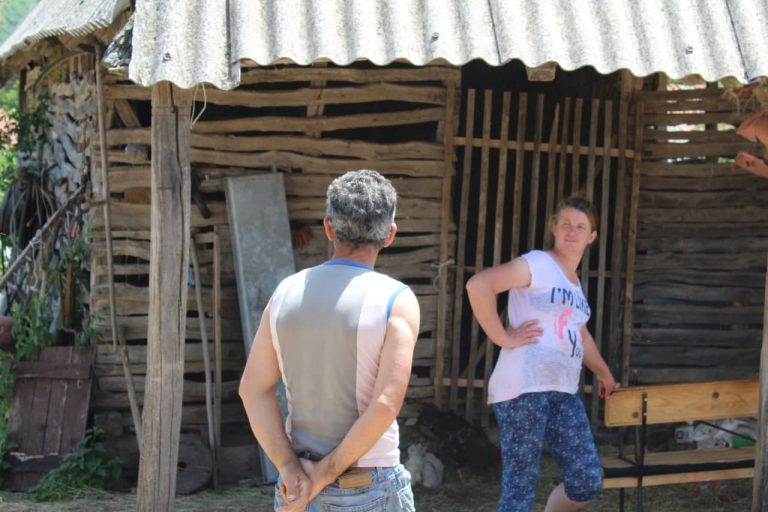
Siniša and Razija Jović and their children, Marina and Mihajlo, live alone on their ancestral land. For two kilometers back along the same road, they have no neighbors. There are no street lamps, signs, house numbers, or streets finding them is impossible without a local guide.
The household is small, but the yard stretches as far as the eye can see. There’s no fence. An elderly woman, Siniša’s mother, sits outside the old house and greets us with a quiet, warm smile. Next to her are her grandchildren, who take care of her.
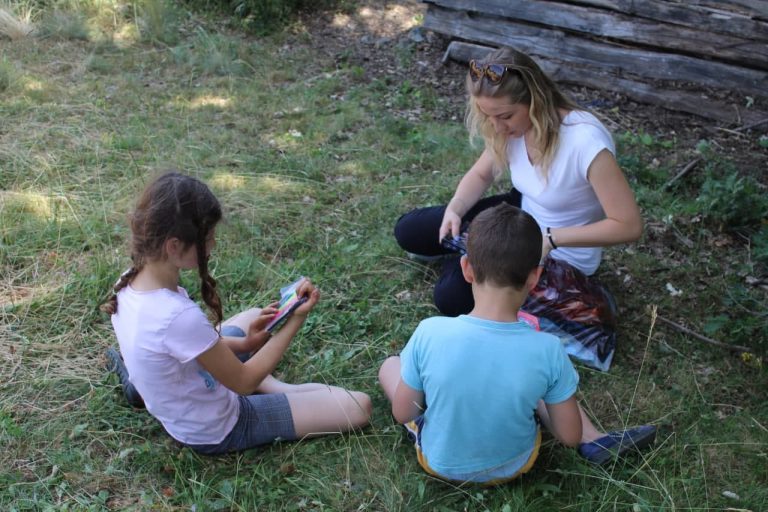
Mihajlo and Marina recently received school transport to prevent the school from closing. Every job here is precious, and children bear the heaviest burden. Marina’s class has just two students, and Mihajlo’s only one more. Growing up here is as challenging as leaving for a larger town. That’s why these two young mountain kids haven’t left the hills for a full three years.
Marina and Mihajlo
– There are two of us here, three at Mihajlo’s, and those two are our cousins. Sometimes they come over, we fill the pool, and in summer, my sister from Albania visits. Otherwise, we stay home all day. Mihajlo plays games. I prefer to be outside. I watch the cows and help my mother. I don’t like phones they give me headaches, Marina tells me as we walk toward a shady spot with her staff for the livestock.
– We have an Albanian boy who often fights with our parents. Once he beat Mihajlo when he was little…
Before I could ask what happened, Marina grabbed her stick, ran down a cliff, across a small embankment to the forest, faster than I could comprehend.
– Sorry, a cow ran off! I can’t give an interview now.
Later, their mother Razija explained that the boy came home bruised.
– Out of the blue, just like that. Fool. The child went down to play, and he thought we sent him, so he beat him. I sued, but it was useless. My child is scared forever, and I can’t leave them alone for even a minute. One house would be easier, but here you can’t leave the kids. Strangers pass by constantly, and Serbs have sold everything. We take care of the cemetery ourselves. We pay our respects on All Souls’ Day, light candles, but everything else is gone. That’s why we’ve rented all the land around us to prevent trouble from newcomers.
Struggle that word, more than an impression, sticks in your mind after this conversation. Razija, a warrior with a tanned, worn face, kind smile, and strong hands from hard work, fought most for love. Even harder than carrying 100 kilograms of milk and water daily from the barn to the house.
– I was constantly harassed by Albanians. Sometimes someone came to the gate; I’d see he was Albanian and speak to him in Albanian. He would ask why I married a Serb. Those I chased away. This is my home, my man, my family. As long as I live! Razija says proudly, hand on her chest, speaking the heavier words in broken Serbian.
Leading the cows, Marina happily emerged from the forest. Swift and skillful, she gathered all eight animals and guided them to the barn to drink. Her work for the day was done. On vacation, she says, the day feels long, but there’s time for everything.
Summer here is quiet and long. Darkness falls late. The moon and sun barely cross paths. In the evening, hills weave around the golden city, and greenery darkens. As far as the eye can see, it remains the same. Nature gives equally to all, but man wanted more leaving Manuta almost empty.
If you can, support our work and the survival of Serbs in Kosovo and Metohija!