


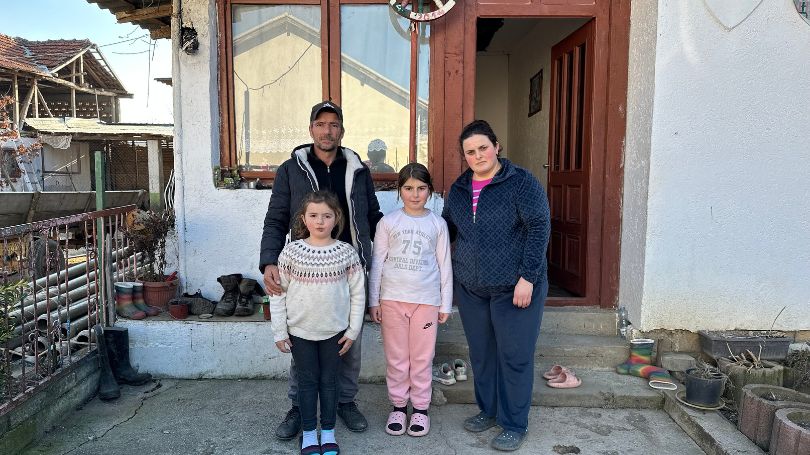
We spoke with Boban Dimić about life as a farmer in Mogila. This village, once well known in the Vitina area for farming and vegetable trade, is today facing challenges. Fewer people dare to farm beyond their own needs. Sales are limited to a one-day Serbian market in Gnjilane, buyers are scarce, and there’s no developed marketplace. Still, vegetable growing remains the main chance for survival here—and almost the only way to earn an honest living, says Boban.
“I grow potatoes, peppers, cabbage, onions, garlic… everything. I also have four greenhouses, but since I don’t own land, I rent fields. This year I started seedlings for the first time, trying to expand. We live only from farming—my wife and I do all the work, and our children help a lot. Sometimes I feel bad for asking them to work in the garden, but they enjoy it and do what they can. The work is tough and exhausting, from dawn till dusk, but honestly—it’s all I know how to do.”
Can You Really Live Off Farming in Mogila?
“To be honest—it’s only enough to survive. By the time you plow, fertilize, plant, and cover other costs, there’s very little left. First, I set aside money for farming expenses and firewood, and whatever remains is very little. Rarely anything stays for the household, and even then, we just invest it back, patch up something, fix what we can… little by little.”
Sadly, support for farmers and small producers in Kosovo and Metohija does not reach everyone. The process of receiving funds or machinery is unclear, and many locals complain about unfair practices. They say it’s pointless to apply for support without political or family connections.
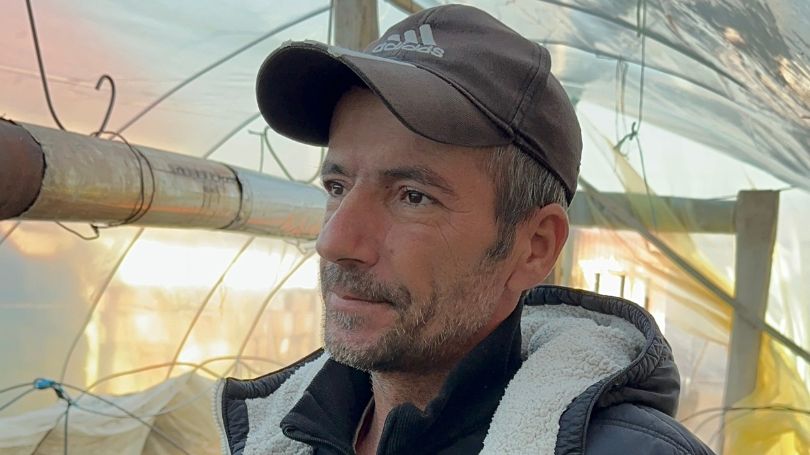
“Who Sits Under the Pear Tree, Eats the Pears”
“Every year I applied for machinery, but you know how it goes—those in the right places get everything. I never got any help from the state. We live only from farming and the child allowance we receive. But I keep saying—God willing, the work must go on.”
A rototiller, disc harrow, and similar machines would greatly ease Boban and Nataša’s work. Meanwhile, their daughters have more modest wishes: a new room, a swing, a bicycle. Valentina is one of the best students in her school, and Blagica is the only preschooler in Mogila.
“They love simple things like a swing or a bike—just like all children. But here, they don’t have much. I can’t let them roam freely around the village—we live at the very edge, the last house. They only play in the yard. I promised them—if the seedlings sell well, I’ll buy one bicycle for them to share.”
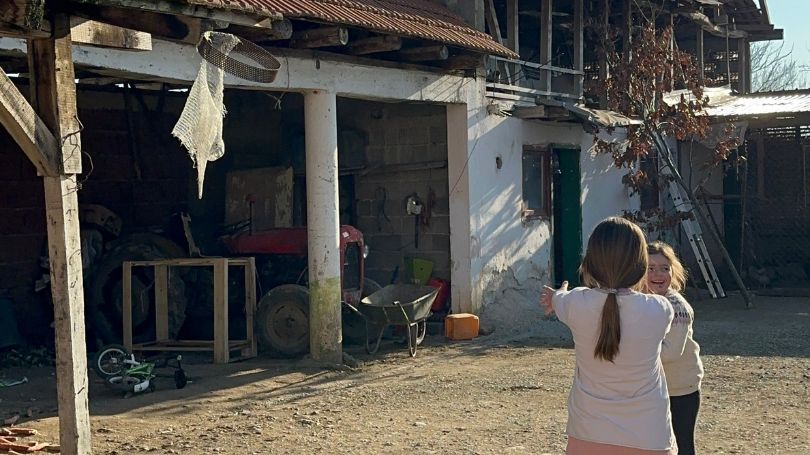
The Dimić Family Is Staying in Mogila
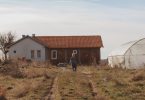
Although Boban faced many hardships—losing his mother at a young age, leaving school early to work, losing his brother to illness, and even surviving attacks on his home by Albanian neighbors—he never thought about leaving Mogila. With his wife Nataša and daughters Valentina and Blagica, he continues to preserve, repair, and build their humble home.
“My mother died when I was in sixth grade. I quit school to work. Later my brother, poor soul, just before getting married, fell ill. But what can you do? You have to live and move forward. We had many problems here before, we’re almost the only Serbian family left in this part of the village. They burned my barn, tried to chase me away, but I never thought of leaving. This is my home—this is where I belong.”
The Village of Mogila in Vitina
Mogila is one of the oldest villages in Kosovo Pomoravlje, part of Gornja Morava, located between Skopska Crna Gora, Mount Žegovac, and Novo Brdo. Today, around 70 Serbian households remain, alongside twice as many Albanian ones. The local school “Marko Rajković” was once multiethnic, but today it has only Serbian children.
Support the action A Little Means a Lot or donateе here to help the Dimić family from Mogila!











Оставите коментар