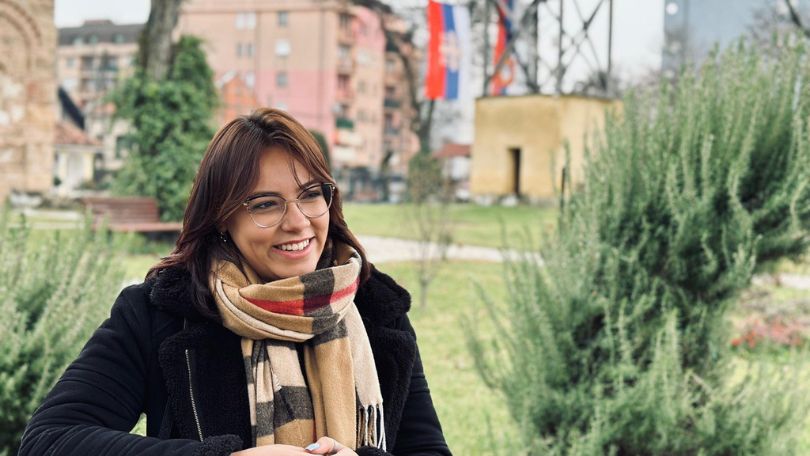
Walking through the town that is slowly losing its old face—Lipljan, a small town near Priština—we are joined by Kristina Vasić, our scholarship recipient. A master’s student of architecture, Kristina describes her hometown as a place where she has remained the only one of her generation. What does a day in the life of a twenty-year-old in Lipljan look like in 2024?
Lipljan – A Town Rich in Heritage and Culture
“There are no young people here. When we come, we are tied to our homes, parents, and housework. There’s still one Serbian tavern in Lipljan, but it’s not really for our generation. When we do gather, it’s usually here at the church. Sometimes we sit in an Albanian café or pizzeria too—that feels normal to us. But the church has always been the center of our gatherings, the place where we feel free. The entire life of Serbs in Lipljan has always been built around the church.”
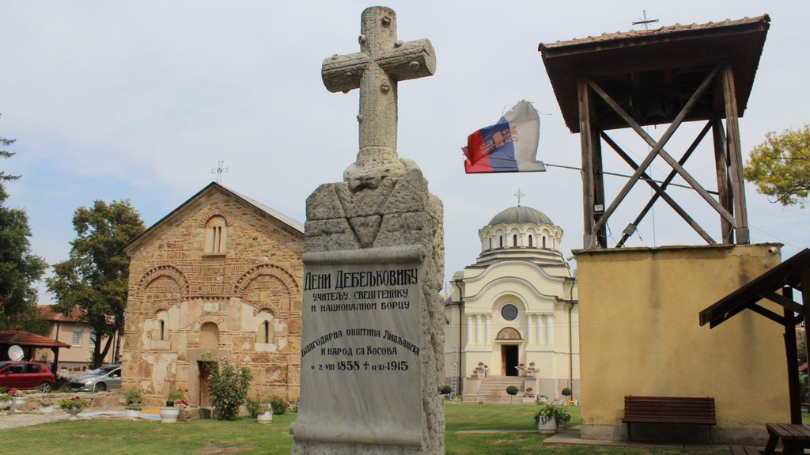
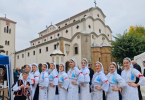
Lipljan churches
All of Lipljan Fits Into the Church
Through many difficult moments in this town and across Kosovo and Metohija, the church has always been a refuge—a place of safety where people placed their hope in God. Today, however, fewer and fewer Serbs remain to gather in the old and new churches of Lipljan. More often, instead of small family houses, tall new buildings rise, overshadowing the sunny churchyard and transforming the face of the once-peaceful town.
Who Wants Lipljan Not to Look Like Lipljan?
“The urbanization of Lipljan feels like an attempt to erase every trace of our presence here. Many houses have long been bought and demolished, replaced by buildings, as you can see. The last one torn down was the building of the Communal Company—one of the oldest of its kind in Lipljan, with beautiful facades. It was truly a symbol of the Lipljan that once was. When I saw even that was destroyed, I thought—now everything will be erased. Lipljan won’t look like the place where I went to school. Sometimes I can’t even recognize my own hometown.”
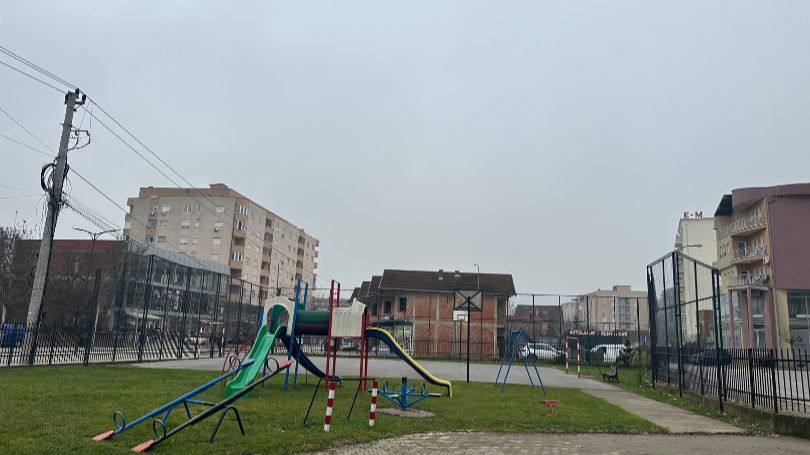
Lipljan
What Makes Lipljan a Place of Wonders and Suffering?
Not far from the church courtyard lies the famous well, once a gathering spot in Lipljan. The story connecting this well to the new church of St. Florus and Laurus reflects Lipljan’s deep Christian history.
“The Church of the Presentation of the Holy Mother of God was built on the foundations of an old pagan temple. Saints Florus and Laurus, to whom the new church is dedicated, were sent to Illyria to build that temple. But once it was completed, they destroyed the idols, gave the temple’s money to the poor, and prayed all night to transform it into a Christian church. Because of this, they were thrown into this very well and became martyrs. Today, the new church bears their names.”
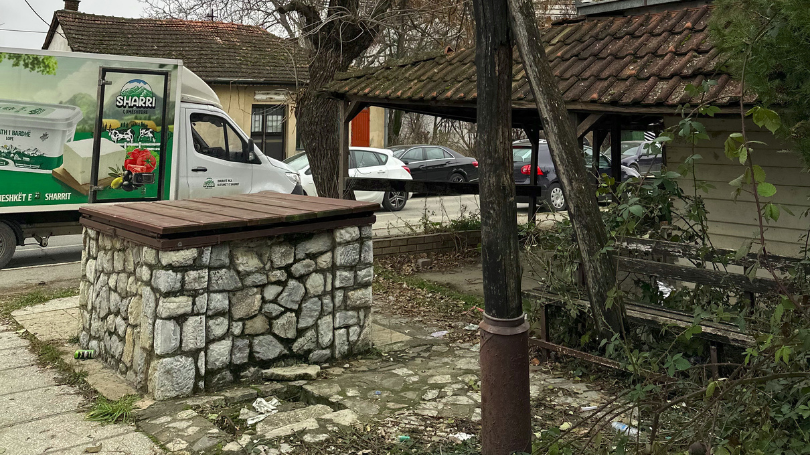
Lipljan well
Old Lipljan is Fading, Collapsing, and Being Sold
Next to the crumbling well stands the ruined Ćina Tavern, once owned by a famous local who refused to sell it at any cost. Now it stands alone, surrounded by new parking lots. In the same street, a few old Serbian houses remain—some already sold and awaiting demolition. Faded signs on shop windows and gates wait in vain for another autumn before they disappear completely, much like the language in which they were written.
“People don’t even know Lipljan exists. I always have to explain that it’s near Gračanica, near Priština. This town has always been overlooked by both institutions and media. Serbs and Albanians have always lived here together, and we’re used to that. We spoke our language, they spoke theirs—that was normal for us. Lipljan is one of the rare multiethnic towns that, to some extent, still works.”
A Hometown That Remains an Inspiration
Its rich history and turbulent past decades make Lipljan a source of inspiration for this young architect. Kristina’s hometown, with its cultural heritage, roots in faith, and centuries-old stories, shaped her passion for architecture.
“I am deeply inspired by sacred architecture. Lipljan is full of such monuments. Besides the well, there’s the monument to the fallen fighters of World War II, the ancient Ulpiana, the church of St. Florus and Laurus designed by the architect of the Saint Sava Temple in Belgrade, and the old church, one of the oldest in this region.”
Sadly, Lipljan is not a place where Kristina imagines building her future. With few job opportunities beyond the municipality and schools—and with so few young people left—she feels there is no space for her to stay. Yet, her family has invested everything in their home and their town, and they will not leave.
“We have given all we could for our house, for this place, for this town. We couldn’t just turn our backs and leave forever.”
Marija Vasić
👉 Support our work and current initiatives: