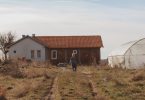
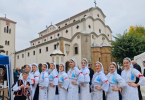
A white Orthodox church sits atop a hill, in a small village embraced by mountains, barely visible through the fogged-up bus window. We pass a road that separates a few spacious, fertile fields at the entrance, after which houses line up along the narrow, steep village streets. We have arrived in Koretište. This is the birthplace of my childhood best friend. The two of us grew up together, went to the same class, celebrated birthdays and holidays side by side every year. Yet, I have never been to her family home. I do not know the sound of the gate to her yard, nor the smell of the hallway as I wait for her to leave somewhere. I wouldn’t encounter anyone around the house, but I am certain I could recognize the path to it from the many photographs I have seen over the years. I am also certain that even though it is my first time here, I know this place so well that I recognize the people, their friends, and family—but unfortunately, no one knows me.
I am here to experience, even briefly, the stories I have listened to my entire life, to carry a little hope for the better days they have in abundance, and to try to understand what they most often lack. In this moment, the answer might seem “Nothing.” But just a few hours later, it would be different—it would be: “Us.” We are what is missing for the people living in Kosovo and Metohija; we are the ones responsible for supporting them and fighting for their right to live equally alongside all citizens of Serbia. It is our duty to remember every child in the enclave, even while raising our own children without neglect. We must notice every attempt they make to help one another and support them in it. We must continue visiting, before someday it is forbidden, as so many other injustices faced by the Serbian people in Kosovo and Metohija often go unnoticed.
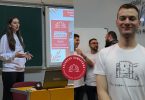
The young people gathered around the humanitarian organization Kosovsko Pomoravlje refuse to accept that life in Kosovo and Metohija is impossible, that everyone must leave, and that nothing can be done for those who stay. They are among the reasons our visits here are never, and will never be, touristic. They are our peers who welcomed us, hosted us, and shared their stories with us. Their generation is the one leaving the most. Thanks to children and young, hardworking, intelligent people from Kosovo and Metohija like them, no matter how many painful memories arise as we visit our sacred sites, abandoned villages, and schools with only a few students, or walk our streets afraid to disturb anyone, we do not feel sad. They preserve the smile of our Kosovo and Metohija and carry it for all of us. We must never allow it to disappear from the face of our land.
Maria Petrović, student at the Faculty of Political Sciences, Belgrade