
A Shared Reflection on Life in Kosovo Pomoravlje with Jovan Zafirović
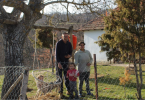
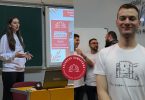
“When James Joyce was once asked in an interview, ‘When will you return to your homeland?’ he replied, ‘Did I ever leave?’ Since I live between Belgrade – Kosovska Mitrovica – Donje Korminjane, I wouldn’t put myself in the category of those who have truly left. My parents, relatives, and friends live in Kosovo and Metohija, and these are the reasons I return and always will. What makes me want to leave? I could talk about that for days…” says Jovan Zafirović, a young aphorist, poet, and Sociology student from Donje Korminjane, near Kosovska Kamenica.
Many young people in Kosovo and Metohija try to reconcile the voices of the heart and reason within them one saying “leave”, the other “stay.” The expulsion of Serbs from cities, economic collapse, and the scars of war have drastically changed life in Kosovo Pomoravlje. Many who endured the hardest years eventually left due to the hopeless economic situation, and sadly, many still leave today.
“…What pushes me away is the lack of basic things for life, as I believe it does for everyone. The uncertainty drives me away. Young people want progress and development, and that’s a major reason for leaving… In short, it’s mostly about things that could be solved, but year after year remain unsolved.” explains Jovan.
His generation has only heard about happier and more carefree times from stories. For a Serb from Kamenica or Gnjilane today, it is unimaginable to be employed in a factory, own an apartment, or enjoy evenings out with friends in town even though the town is only a few kilometers away. Often, one hears that Serbs and Albanians “live normally” here, but perhaps that is the clearest proof that the law of the stronger defines what “normal” means. That law allows Serbs to live but mostly only in their villages. When they go into town, it is strictly out of necessity, speaking as little as possible when leaving their money in shops, before quietly returning home grateful for being tolerated, and repeating: We live normally.
Kosovo Pomoravlje is often unfairly overlooked in the media, just like the number of Serbs still living in the municipalities of Kosovska Kamenica, Gnjilane, Novo Brdo, and Vitina making up nearly one-third of the Serb population in the southern province.
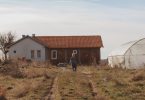
The abandoned landscape here perhaps tells the story best: huge, unfinished houses in every Serbian village, already decaying. They were built for newly married sons whose children are now growing up far away, far from their ancestral land. Chimneys never had the chance to smoke. These houses like branches heavy with blossoms, broken and left to rot by the roadside are even sadder than the few burned and demolished homes that remain in Pomoravlje. In them lies a life that never happened: a dream the young never had, and the older generation never fulfilled.
All this leaves Serbs in Kosovo caught between the questions: Should we leave? Where would we go? Jovan, as a child of the post-war period, thinks he knows why: “I was born just before the bombing. I can only speak of pre-war life through the stories I love to hear from the elders. Life was livelier, people more united. That spirit lasted a few years after the bombing too. But then came foreign influences, sowing division, and they took root quickly.”
The older generations are dying out, those born just before the war are leaving under many pressures, and a cloud of hopelessness is forming… People only believe in God now, because He is the only one who hasn’t let them down.
The mistrust that Serbs in Kosovo and Metohija feel toward the Albanian authorities and foreign forces is understandable and well-founded. In the past, Russian soldiers secured the Kamenica area, alongside Greek forces near Gnjilane and Vitina. Most Serbs believe that the Russian presence played the biggest role in helping them remain on their land. They recall that the sense of security and trust in foreign troops back then cannot even be compared to what came afterward.
Today, the situation is drastically different, with fewer and fewer authorities left that Serbs feel they can trust. Life is especially difficult for Serbian villages that, after Kosovo’s unilateral declaration of independence, fell under Albanian municipal rule. Not knowing the language, locals often cannot exercise their rights in institutions, protect property, or report irregularities. Questions like: “Where do you live? Whose country is this? What language do we speak here?” are common followed by: “Learn Albanian, then come back for your papers!” often heard at office counters.
Many people from around Kamenica, Gnjilane, and Pristina are left on their own, with no one responsible for their lives. Their villages often lack asphalt roads, sewage, even phone signals. To reach them, one must pass through Albanian settlements, and the only sign that you’ve arrived is that the road simply ends. For such families, humanitarian aid and visits from volunteers are often the only support and bright spot.
And this, somehow, has become “normal.” Serbs say they live normally on a minimum wage that has never been raised. This minimum income, less than social welfare, is all that remains of jobs once held in state factories. It barely covers children’s education and basic needs. Waiting for a pension that will also be minimal, many fear they won’t live to see it, or won’t have anyone of their own left when it comes.
Dreams are modest, plans distant and uncertain. The sense of everything being temporary discourages young people from starting families here. The few Serbian institutions that exist are overcrowded, as they are the only places where Serbs might find employment. There is no economy, industry was taken away, and economic recovery is nearly nonexistent.
Life in Kosovo and Metohija is hard to compare with anywhere else—and such comparisons weigh heaviest on those whose hearts remain forever in the place where they were born.
“Belgrade is like a bird in the sky, Kosovo and Metohija like a bird in a cage. Completely different. Belgrade never sleeps, Kosovo and Metohija rarely awaken usually only during major holidays. People in Belgrade have various ambitions and priorities; people in Kosovo and Metohija prioritize simply waking up without finding their garage broken into, livestock stolen, or farm tools gone. The priority is just to wake up. While people in Belgrade are free from these burdens and their voices are louder, the Serbian trumpet from Kosovo plays too, but the world pretends not to hear.” says Jovan Zafirović.
Those who call this “normal life” may never understand the people who, despite it all, remain on their land armed with unbreakable spirit, patience, and sincere faith. In spite of everything. In spite of the world.
-
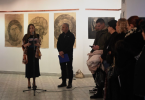
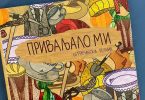
Jovan Zafirović was born in Kosovska Kamenica and grew up in Donje Korminjane, where his family still lives. He completed elementary and high school in Kosovska Kamenica and is now a student at the Faculty of Philosophy in Kosovska Mitrovica. He is a recipient of the Vib Award from Politika, the oldest Serbian newspaper, recognizing the best young aphorists. He has published two collections of poetry about growing up and living in Kosovo and Metohija, donating all proceeds to children in his hometown kindergarten. His work is infused with love and care for Kosovo and Metohija, bearing witness to the suffering of his people and of another generation growing up in uncertainty and fear for their very survival.


Marija Vasić
Editor
Humanitarian Organization Kosovo Pomoravlje
👉 If you can, please support our mission and the survival of Serbs in Kosovo and Metohija: