
“It was a quiet, ordinary day. We were visiting my uncle. As soon as we got home, my uncle took Miloš by the hand to buy him ice cream. People from the village were sitting in front of the shop, drinking beer, it was around evening… Suddenly, a burst of gunfire echoed. I was on the bridge, right in front of the shop. Miloš was waiting for my uncle to bring out the ice cream… I only remember someone grabbing me by the shoulders and pressing me against the wall. The next thing I recall is the sound of a helicopter and screaming…”
That day in 2000, in Cernica, before the eyes of his older brother, his uncle, cousins, neighbors, and even KFOR units, four-year-old Miloš Petrović was killed by machine-gun fire while waiting for his uncle to buy him ice cream. His cousin, Vojin Vasić, who tried to shield the child, was also killed, as well as their neighbor, Tihomir Simijonović.
“Fifteen seconds… that’s how long it lasted. Shock. People were in panic. My parents lay on the concrete. A helicopter took Miloš to Bondsteel, but he passed away on the way. They didn’t allow my uncle to go with him. He entered the house covered in blood, carrying Miloš in his arms… The killer ran away, up the stream, toward the Albanian neighborhood. They never confirmed the name of the man who pulled the trigger,” recalls Lazar Petrović, Miloš’s older brother, today a Russian language teacher in Cernica, near Gnjilane in Kosovo and Metohija.
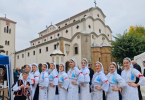
In this small village in southern Kosovo, after 1999 when 700 Serbs were expelled, the remaining Serbs lived on the edge of the village, around the church and school, surrounded by Albanian homes. That one street became both the place of survival and Lazar’s most painful memory.
“See that jeep coming down the hill? That man was once in prison as a suspect, but he was released. He’s here every day, we see him. But you can’t just say it—he’s the killer. We never received the results of any investigation. The Americans led it all, came, searched, launched operations Kushner was with them… But nothing. To this day, the truth was never revealed, nor who committed the other attacks. Sometimes I wonder what’s the meaning of life when everything is like this? My family rarely talks about what happened, and I don’t want to ask my father who he suspects, so as not to reopen old wounds. I know he would never allow me to get involved in seeking the guilty, because he himself never did. He lost one son and didn’t want to lose anything more. But he never agreed to leave, even though everyone urged us to.”
The suspect in Miloš’s murder still passes by the Petrović home every day, watching everyone from his property on the hill above.
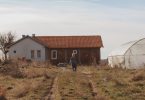
Like other Serbs in Cernica, the Petrović family are natives of the village. Their house lies right at the border with Albanian homes, making life there a constant struggle. Stone-throwing, broken glass, and vandalism became daily “entertainment,” with no law or institution to stop it.
“We were on the edge, and so we had the worst pressure. Their goal was to intimidate us until we left. Look over there those two houses. That’s where my aunt-in-law, Blagica Vasić, was killed in 2000. Albanians planted a huge amount of dynamite between our two houses during a family lunch. Half the family was inside. Some barely survived. One cousin hid in the fridge, another was saved by a TV cabinet. They never returned to live here again. My uncle also left he was the target because he was the village leader, the biggest support, respected by both Serbs and Albanians. When it happened to him, everyone Serbs and Albanians asked WHY.”
The investigation, again led by American KFOR, never identified the perpetrators.
“I wish I could find teacher Mile’s diary. He recorded every tragedy in Cernica. He was killed in 2003, right in the village center, when a bomb was thrown onto the street. I was walking with him from my house but stopped to ride a scooter with a friend. If I hadn’t, who knows… Teacher Mile lay in a pool of blood, asking for water. American soldiers stood with rifles pointed at us, not allowing us to approach until their ambulance came. But it was too late… he died in Bondsteel base. At that moment, at least twenty children were on the street.”
Life in Cernica remains difficult. Murals, monuments, and institutions named after KLA figures surround the Serbian street, now named after Miloš Petrović. Outsiders rarely visit, and every unfamiliar car is closely watched.
“Two years after my brother’s murder, they sent me to school in another village. I wouldn’t see my parents for fifteen days, and even though that village was close, for us back then it felt too far. You couldn’t go anywhere without an escort. My parents were so worried that they sent me away for safety. Every day we would find bombs in our yard. Every day my father called KFOR, and they would come to inspect, only to tell us that we were throwing bombs into our own yard, and then they would search our house… That’s what it’s like when America ‘protects’ you get to play however you want.”
Today, reaching Cernica or rather, the Serbian part of the village is a little safer. Foreign forces are no longer present, and the police patrol only occasionally. Still, from the entrance of the village to the turn into the only Serbian street, now named after Miloš Petrović, everything bears the mark of the terrorist KLA. Murals on schools, monuments, institutions named after them… Albanians are not used to outsiders coming here, so every new car that passes through is carefully watched.
“Even today, since we live right along the street, we keep finding things stones, bottles, shards of glass… It seems they find it amusing to throw them at our houses, but we’ve become used to it. Still, I won’t leave. I can’t imagine myself living anywhere else. Even when I go to Smederevo, Belgrade, Niš it’s nice, but it’s not the same air… Here, I belong. I never imagined myself anywhere else.”
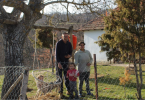
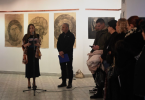
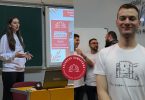
Guided by his deep love for his homeland, Lazar managed to stay in his native village, together with his parents and a younger brother who was born later. They are each other’s greatest and only support. As a Russian language teacher, he is deeply devoted to the children of the village, doing his best to make their childhood brighter and freer from worry than his own. Every year, he organizes a memorial basketball tournament “A Basket for 7,” in memory of seven fellow villagers who lost their lives. At his initiative, the village youth raised money to build a new basketball court, which was also named after the youngest hero of Cernica, Miloš “Miki” Petrović.
“We would never think of revenge, but justice should be served. At least that. We try every day to cope as best we can with what happened to our family. It took time and effort to learn how to live with these traumas. My mother still takes medication to this day, and only she knows how she has endured all these years. Because she wakes up in the morning, makes coffee, and looks at that very spot. We’re here every single day… They wanted to achieve something, I don’t know if they succeeded, but if they wanted to drive us out, that will never happen. My father, whenever he passes by an Albanian beggar, always leaves a few coins. My mother asks him why ‘they killed your son, your brother, your daughter-in-law…’ He just says, ‘They’re people too, and not all of them are the same, just as not all of us are.’ That’s what guides me too to never hate, never seek revenge, because we are not the same.”
From 1999 to 2003, seven Serbs were killed in Cernica and ten more were wounded. All attacks targeted civilians during a supposed ceasefire. The material damage to Serbian homes was enormous, and even the church of St. Elijah was not spared destruction. Today, life in Cernica remains difficult and filled with uncertainty. Serbs move only within the circle of the church and the school, while leaving the Serbian part is unsafe without a car. Children attend classes in a rented private house, in poor conditions, without proper supplies, while the former school building has been taken over exclusively by Albanians.


If you are able, support our work and the stay of Serbs in Kosovo and Metohija!