“Oh Gnjilane, desolate town, is there no joy for you? A Serb comes and then leaves, and Gnjilane still suffers.”
Along the valley of the Binačka Morava, in the eastern part of Kosovo and Metohija, many settlements stretch out. On its left tributary, the small Dobrusa stream, lies the largest of them all – the town of Gnjilane. Positioned at the geographic center of the Kosovo Pomoravlje district, Gnjilane was once the political, cultural, and economic hub of the region.
Historical records of a settlement here date back to the Middle Ages. The town was once called Morava, and even Serbian ruler Stefan Dušan is said to have visited it.
The name Gnjilane first appears at the end of the 14th century in a charter of Princess Milica, wife of Prince Lazar. According to Serbian sources, the name comes from the word gnjilo (meaning soft, rotten), as the area where the town now stands was once a muddy swamp. Later, Gnjilane fell under Ottoman rule, along with the rest of medieval Serbia, until its liberation in 1912. In the late 19th and early 20th centuries, as a border town on the Ottoman side, the verses of a folk song expressed the mood of the time: “Oh Gnjilane, desolate town, is there no joy for you? A Serb comes and then leaves, and Gnjilane still suffers.”
The foundation of Serbian public life was the Church. It was considered the cradle and spiritual center of the Serbian people, as confirmed by the existence of several churches in Gnjilane.
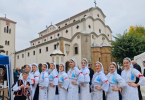
There was once a church dedicated to St. Petka, as well as a monastery dedicated to St. Jovana, which the Turks destroyed completely. In 1861, the Church of St. Nicholas was built in Gnjilane. It often suffered damage, and in 1892 it was burned to the ground. Rebuilt in 1900, it remains to this day an oasis of freedom and a gathering place for Serbs in the town.
After the withdrawal of Serbian and Yugoslav forces from Kosovo in June 1999, the visible Serbian presence in Gnjilane was reduced to the church alone.
Before June 1999, only one Serbian house in Gnjilane had been destroyed. By the end of October of that same year, 280 houses were burned or demolished. With the arrival of international forces, only a few dozen Serbs remained. Numerous crimes were recorded, particularly by the notorious so-called Gnjilane Group of the KLA.
Serbs left in columns, escorted by KFOR, as flames consumed their homes behind them. The wave of violence in March 2004 drove out nearly all remaining Serbs. During those riots, many holy sites across Kosovo and Metohija were damaged, including the Church of St. Nicholas in Gnjilane.
The only street in Gjilan where Serbs gather
With their departure, Serbs took their institutions with them. Schools, municipal offices, theaters, and other institutions now function in nearby Serbian villages, while Gnjilane, emptied of Serbs, still waits for better times.
On Vidovdan in 2009, municipal authorities demolished with a bulldozer the memorial fountain dedicated to the Knights of Prince Lazar, erasing traces of Serbian history, as though they did not know that the very soil of Kosovo is soaked with the blood of heroes.
The post-war years were marked by chaos daily murders, kidnappings, arson, and intimidation of Serbs. Visiting the cemetery on memorial days had to be done in guarded columns. Today, life there is just a faint shadow of normality.
Where the monument to the Knights of Prince Lazar once stood, there is now a monument to the terrorist KLA member Agim Ramadani.
Until the war in 1999, industrial production was developed in Gjilan. The people of Gjilan could boast of large production facilities in the textile, tobacco, and battery industries. Construction and radiator production were also developed. After KFOR took control of Kosovo and Metohija, the functioning of these giants ceased, with Serbs being completely disenfranchised and excluded from further participation in deciding the fate of the companies. Finally, the entire property of all large companies is being usurped by self-proclaimed authorities. The property is illegally privatized, and large production facilities are now sparkling shopping malls.
Most Serbs now live in Pasjane, Parteš, Donja Budriga, Koretište, Stanišor, Gornji Kusac, and Šilovo. Predominantly rural, they proudly say they have lived in these parts “since time immemorial.” With resilience, experience in survival, faith, and optimism, they continue their struggle to remain.
Nearby lies the medieval fortress of Novo Brdo, as well as the remains of Prilep fortress, birthplace of Prince Lazar. About 30 kilometers away is the greatest spiritual treasure of this region the Monastery of Draganac, dedicated to the Holy Archangels Michael and Gabriel. It is not only a spiritual home but also a bastion of Serbian tradition and identity in Kosovo Pomoravlje.
Albanian flag on the bus station buildingMonument in the church yard:
Nikolče Đorđević 1857-1902
A PROMINENT PATRIOT MURDERED BY ORDER OF THE TURKISH AUTHORITIES
HIS NAME PROUDLY ENGRAVED
GRATEFUL DESCENDANTS