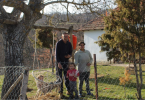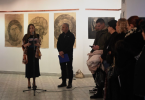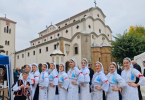

Jelena Cvetković is a fourth-year medical student at the Faculty of Medicine in Kosovska Mitrovica, Kosovo and Metohija. She grew up in the village of Parteš, near Gjilan. Jelena is one of the top students in her class and a recent scholarship recipient from the Humanitarian Organization Kosovo Pomoravlje. Her academic excellence, love, and devotion to her people were recognized and supported thanks to a generous Russian donor. A unique conversation with this inspiring doctor on TikTok revealed much about youth life in Kosovo and Metohija, their daily lives, and hopes for the future.
You decided to showcase your studies and life in Kosovo on one of the most popular social media platforms to show people that life still thrives there. Some of your videos have over a million views. On your TikTok channel, you often show Kosovska Mitrovica, student life, and everyday life in Kosovo. What is it like in real life, and how do people react online?
Mitrovica is a small city with a unique spirit and student energy. It’s not a big city with theaters, cinemas, or nightclubs, but it has a special energy that keeps it alive. Students gather, play guitars in front of the dorm, and socializing lifts me and gives me strength. Everyone who studied here remembers those years with great nostalgia. Having colleagues who check in, help, or share important information is invaluable.
We come from different places: Raška, Novi Pazar, Tutin, and even Montenegro. There are no Albanian students here; they don’t attend our faculties. I love having classmates from other regions. I adore people from Novi Pazar and enjoy learning about their faith and culture. Being here allows me to break stereotypes and show what studying in Kosovo and Metohija is truly like.
Are there any negative comments, is there a fear of that in public space?
I often record videos about life here and I see that people like it, that they are interested.
People also make bad comments because of their narrow understandings, in my case when I post a video from Mitrovica, those bad comments are like, is there really a faculty in Mitrovica, who will these people who graduate here treat, does this even count as a city, or something on a national basis… I don’t keep company with people like that. I think that today, those who are educated, fulfilled, and live their lives according to their principles would not leave such a comment to anyone, especially not a young person.
The only thing that matters to me is that I managed to show young people that it really doesn’t matter where you study, the only thing that matters is how much you love what you study. It’s the 21st century now, the internet has expanded so much, I can download literature not only from our country, but also from abroad, and I can’t differ in my studies from any student in Belgrade, Novi Sad… Because my desire is the same as theirs.
My only fear is that when a patient sits in front of me tomorrow, I hope I’ll know the answer to their question. Nothing else matters more it’s what drives me forward
Do you ever want to leave here, or do you feel like you wouldn’t be yourself anywhere else?
I think I would be me wherever I am, because I have some values within me that I don’t change so easily. Maybe this environment narrows down some possibilities, but I believe that everything comes from us. People are more important. I always see myself here, I can only imagine myself here. I have a side that likes to explore, I would be interested to see if I could fit in somewhere. But what I can say is that sentimental, emotional moment that draws me to Kosovo is stronger.
I believe that I, like everyone else around me, with a million flaws and just as many virtues, are where we are for a reason. I think a person functions best where they grew up, where they know their people, their mentality, and what kind of reactions they can expect.
In Serbia, people are warm, full of emotion and history, and I always feel I belong here. Speaking in another language changes the way we express ourselves, so being at home matters for personal expression. Professionally, it’s not an issue, but culturally and emotionally, it is important.
And I always imagine myself in Serbia, because I know that I function best with my own people. I don’t know if I could with anyone else, especially in a foreign language.A person can only express emotions in their own language in the right way. I’m afraid of, you know, when people say you change when you speak English, for example, you sound different, your voice has a different timbre. I think that somehow the expression of personality is also different in a foreign language, so from that point of view it would be debatable. As far as the profession is concerned, that’s not a problem, but everything else is important to me too. If you ask me if I could leave, the answer is yes, but if I would want to, no, I wouldn’t.
Is it difficult for young people in Kosovo and Metohija to fight for their ideas?
In general, it is difficult for young people in Kosovo and Metohija. Support for young people is sorely lacking. Many things work differently here. In other places, young people have more opportunities to work while they are in school, various agencies, cooperatives, companies, organizations… They can keep up with what’s happening. It’s harder here. Children grow up more modest, withdrawn, suppressing their ideas, trying to help their parents, sometimes extinguishing their desires very young, because they don’t dare to try, but accept every job. They don’t dare to think of something of their own, to seek their own path. Either they follow their parents’ path or they run away abroad, although I see it as an escape or a search for a better life.
It is very important that there are some people who try and do something, to show that it can be done differently and who want to realize their potential.
Anxiety, loneliness, alienation, these are all diseases and struggles of today’s youth around the world, what is the situation like in an environment like Kosovska Mitrovica?
Everything is uncertain in Mitrovica, that’s where the psychological problems among young people come from. We have two groups of people who study. Those of us who are here from Kosovo and Metohija and who have learned through life how to accept it and have gone through similar difficult situations, and people who came from outside.. All of this is even more stressful for them, because for the first time they encounter barricades, attacks, bombs, shootings… This causes anxiety, and in addition, interpersonal relationships, like everywhere else.
Pressure, expectations, everything that we already carry as a problem within ourselves and then it is activated due to some trigger in the environment like home or college, where we are not at home. I think I would feel the same when I have such a problem both here and in Belgrade. If I were there, I might be even more troubled when something happens here, and I hear about it on the news. It would be a question of whether I would lie down in bed under medication or get on the bus and come here. I wouldn’t be able to study peacefully without knowing if my family is safe, at least we’re all here, things look different from this perspective.
It is definitely true, however, that students in other cities, apart from all the student problems, do not think about some things the way we do here, and it is not even normal for them to think about them, and that is where our studies differ the most.
That’s why when someone contacts me on social media and asks how it’s in Mitrovica, whether it’s possible to study, I always say, it’s all normal for me, but I’ve been here my whole life, I don’t know how all these circumstances can affect someone who has never lived in similar environments. Now, compared to before, it’s good here, but you never know how it will be and what will happen.
Serbs and Albanians in Kosovo and Metohija today live in parallel worlds, speaking different languages, attending different schools, learning different histories, saying they are from different countries… What is the future of such a relationship in your opinion?
My view is that I could form a friendship today with someone who is Albanian from Kosovo. However, that relationship would certainly not be based on the past or on things that will very likely be offensive to both sides. It may seem superficial, but at the moment, that is the only way it can work. I see many international organizations trying to work on relationships between young Serbs and Albanians, but it’s not the same there is a lack of sincerity. Everything is forced to appear “okay,” but we don’t feel that way. If you attend such an event from the music played, the forced closeness with Albanians, to the ban on national symbols for Serbs it all makes us feel uncomfortable, and nothing feels right. Emotions among youth here are heightened; it takes very little to spark conflict, and those organizing these programs often ignore that.
Wherever I live, whatever I do, my nationality is what it is, my country is what it is, and my faith is what it is I am who I am, and these things make me.
That is why it is absurd to deny them. Wherever we live, we are who we are, yet Serbs are denied this, even in the place where they were born. The willingness to accept others starts at home. If children are taught to hate, we will never break out of these limits. Still, it has happened that young people working in the city spontaneously want to talk, to see how life is from this side. I believe that without this external mentorship, we would live together better and more harmoniously we lived together before, after all.


If you want to help more young people in Kosovo and Metohija, support the scholarship project of the Humanitarian Organization Kosovo Pomoravlje to assist students and pupils in their education.
DONATIONS