Pročka
Today marks the last day of White Week, just before Clean Monday, when the Great Lent begins. Before the Second World War, most Serbs living in villages celebrated White Poklade, a day of forgiveness and reconciliation. Poklade is a Christian holiday that, according to folk traditions, involves family feasts and village festivities on the eve of major fasting periods. Serbs in Kosovo and Metohija call this holiday Pročka or Prošene Poklade, highlighting that on this day, all conflicts should be reconciled, offenses forgiven, and hearts and souls prepared for the upcoming fast.
It was once believed that evil forces, especially witches, were driven away on Pročka. In villages around Gnjilane, ceremonial bonfires called karaveštice were lit on streets and squares for villagers to jump over. The name comes from the word “karati,” meaning to drive away witches. Locals, mainly children and youth, gather around these ritual fires, first jumping over them, and sometimes—by playful trickery—getting their faces smudged with soot, to scare the witches away. The exact origins of this custom are unknown, though locals believe it dates back to the Ottoman period. Some consider it part of the ancient Slavic heritage, as similar celebrations are found among other Slavic peoples, not just the South Slavs.
Pročka customs are full of joy and laughter, fostering harmony and goodwill within families, among neighbors, and throughout the village community.
Families prepare a rich festive dinner, with dishes in Sirinićka Župa referred to as white foods. Traditional dishes include cabbage with bacon, cabbage pie, cheese, meat, and dairy products.
A favorite custom among children is amkanjе or lamkanje of eggs, performed after dinner. A hard-boiled, unpeeled egg is pierced, tied with a string, and hung from a chandelier or ceiling. Children gather beneath the egg and try to catch it with their mouths. It is said that whoever succeeds will have the most luck in the coming year.
In the town of Štrpce, Sirinićka Župa, a series of events are organized throughout the day, creating a colorful carnival prepared over the course of the year.
Locals believe that on this day, Prince Marko gets married. The Wedding of Prince Marko is celebrated each year with a humorous play, mainly involving young people and children. Special masks made from wool, leather, fur, and other materials are crafted for participants, who represent the wedding party of Prince Marko.
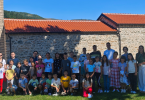
Štrpce, photo: Boban StojanovićŠtrpce, photo: Boban Stojanović
Pročka, or Proćke, is primarily an Orthodox celebration, and its traditional customs today are mostly for entertainment. In some places, people jump over karaveštice, in others they perform olalije, and some wave kumbare. All Orthodox Christians, however, refer to this day as Cheese-fare Sunday or the Sunday of Forgiveness, as the evening church service includes a rite of mutual forgiveness.
Ultimately, it is up to each of us whether and how we celebrate White Poklade. What is important is to know the customs of our ancestors, to appreciate the karaveštice, and to remember that while these traditions are playful and old, they carry cultural value—especially in a time when more of us are thinking about which costume to wear for Halloween.