Metohian Sfumato Presented at Prometej
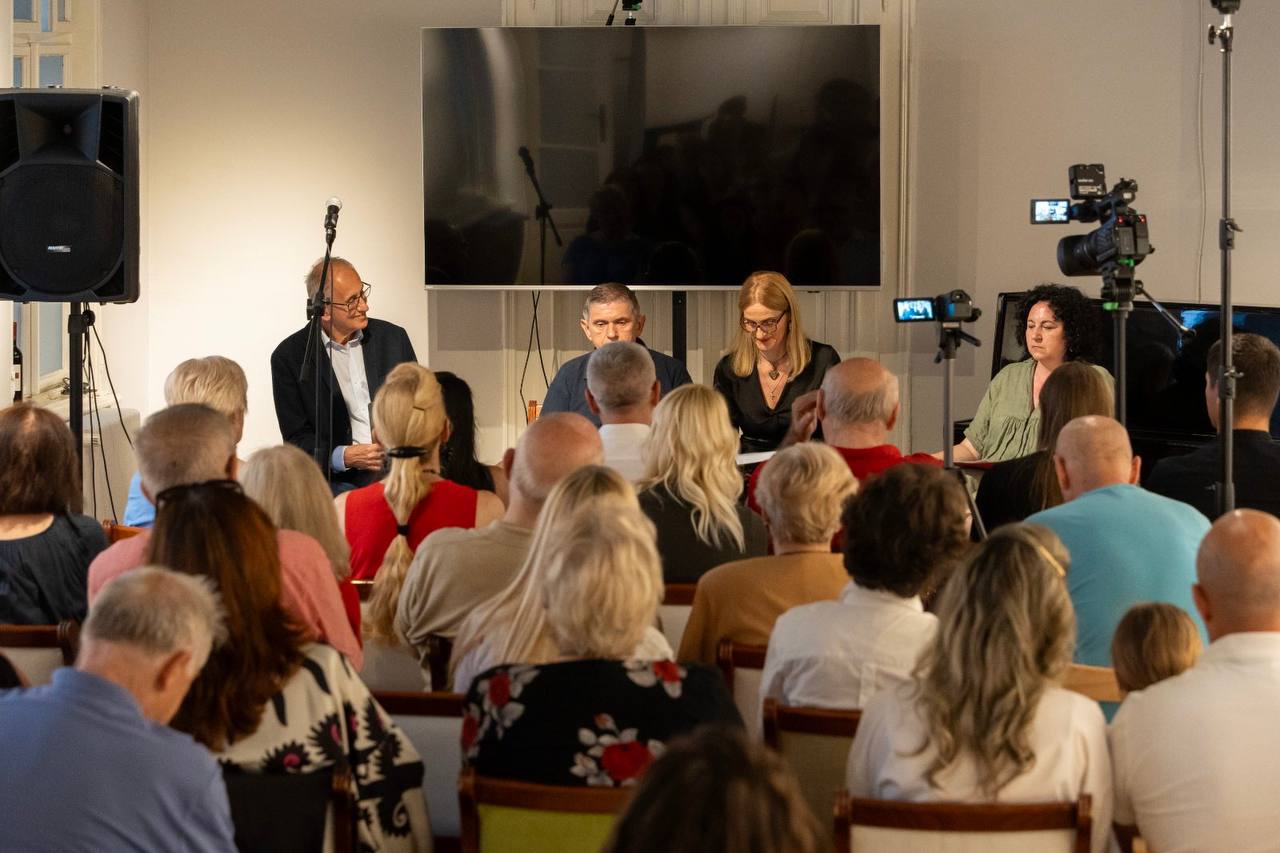
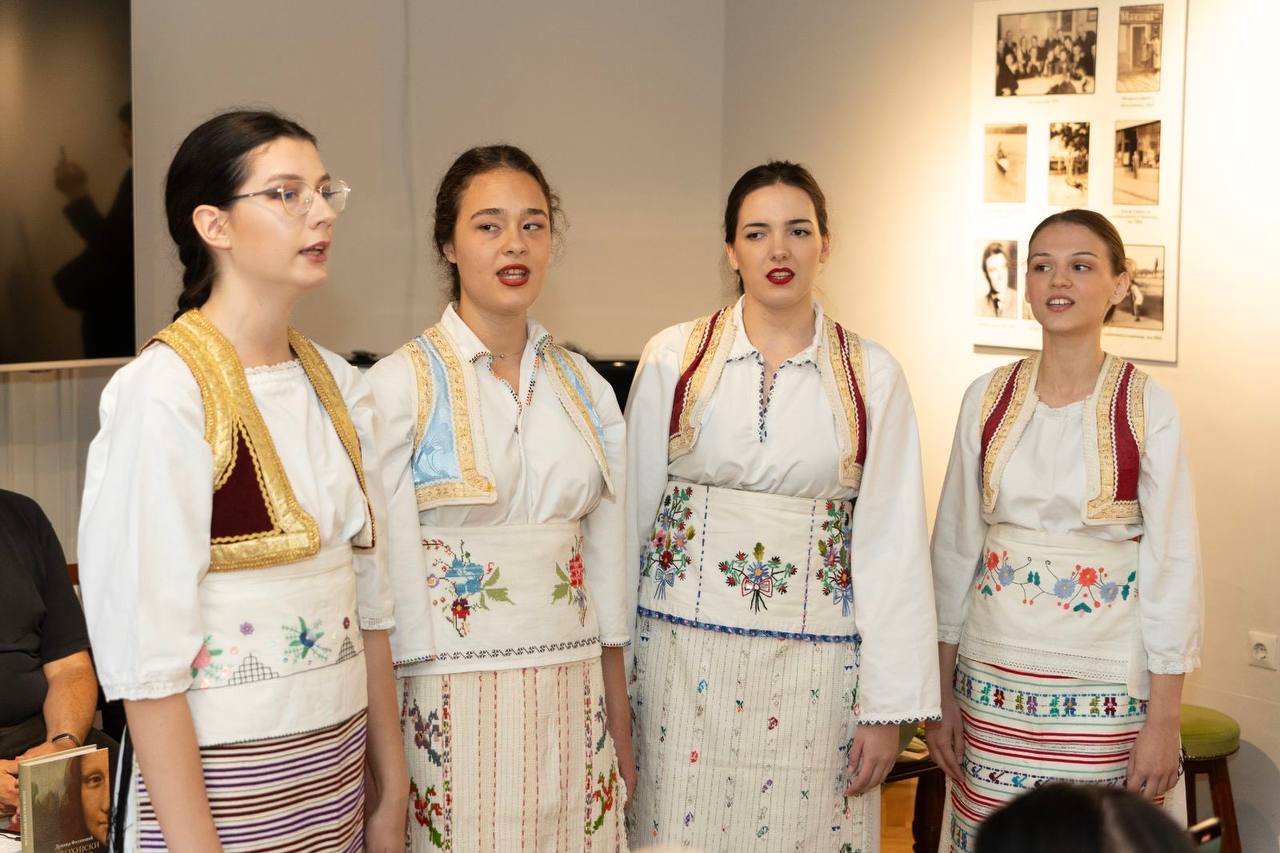
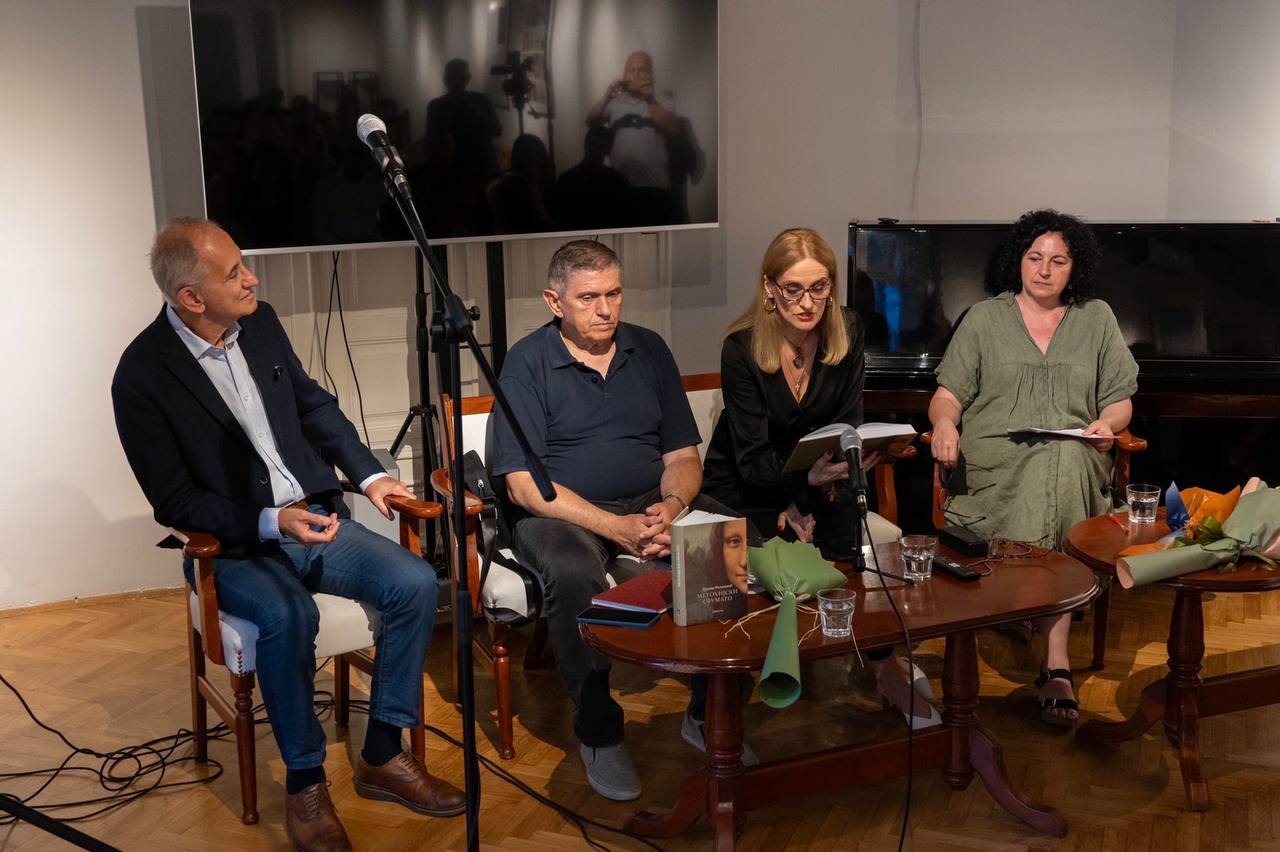
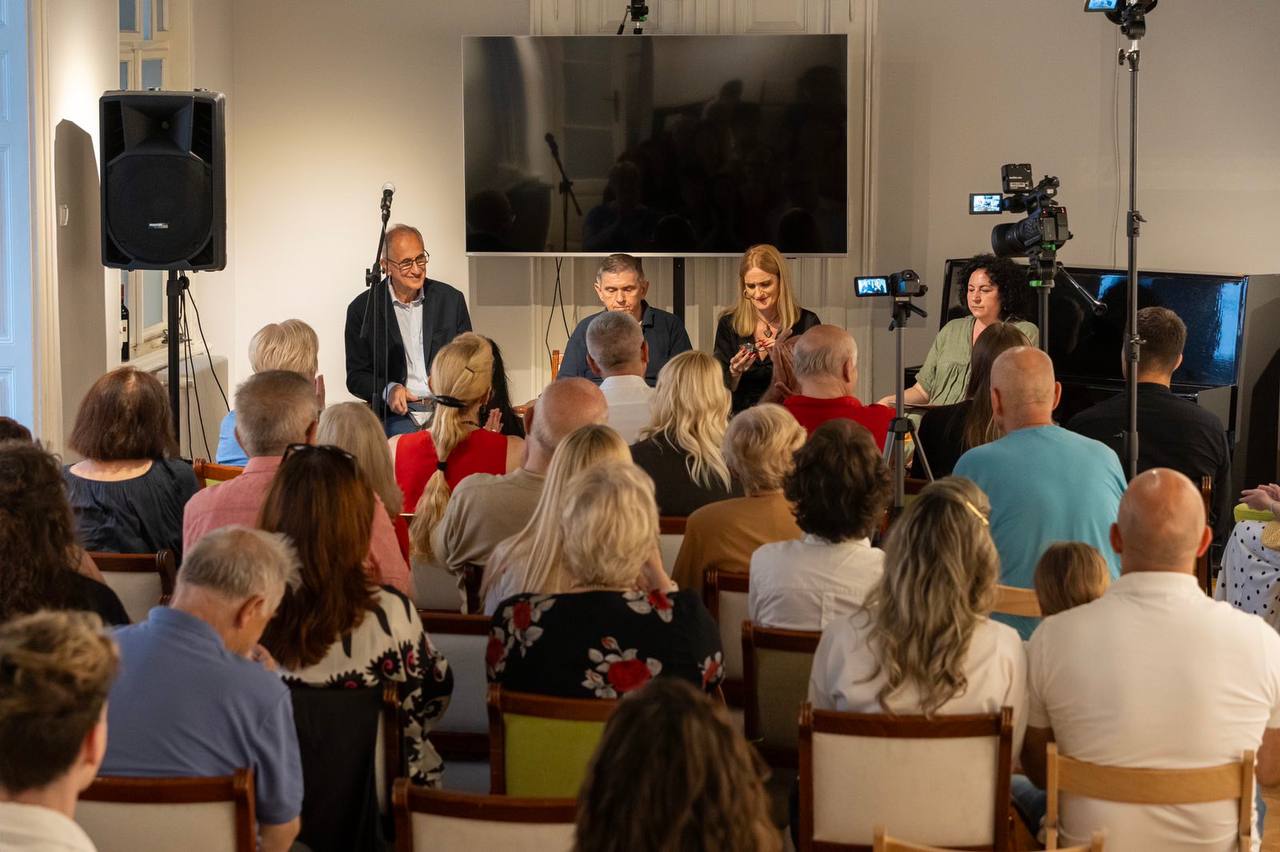
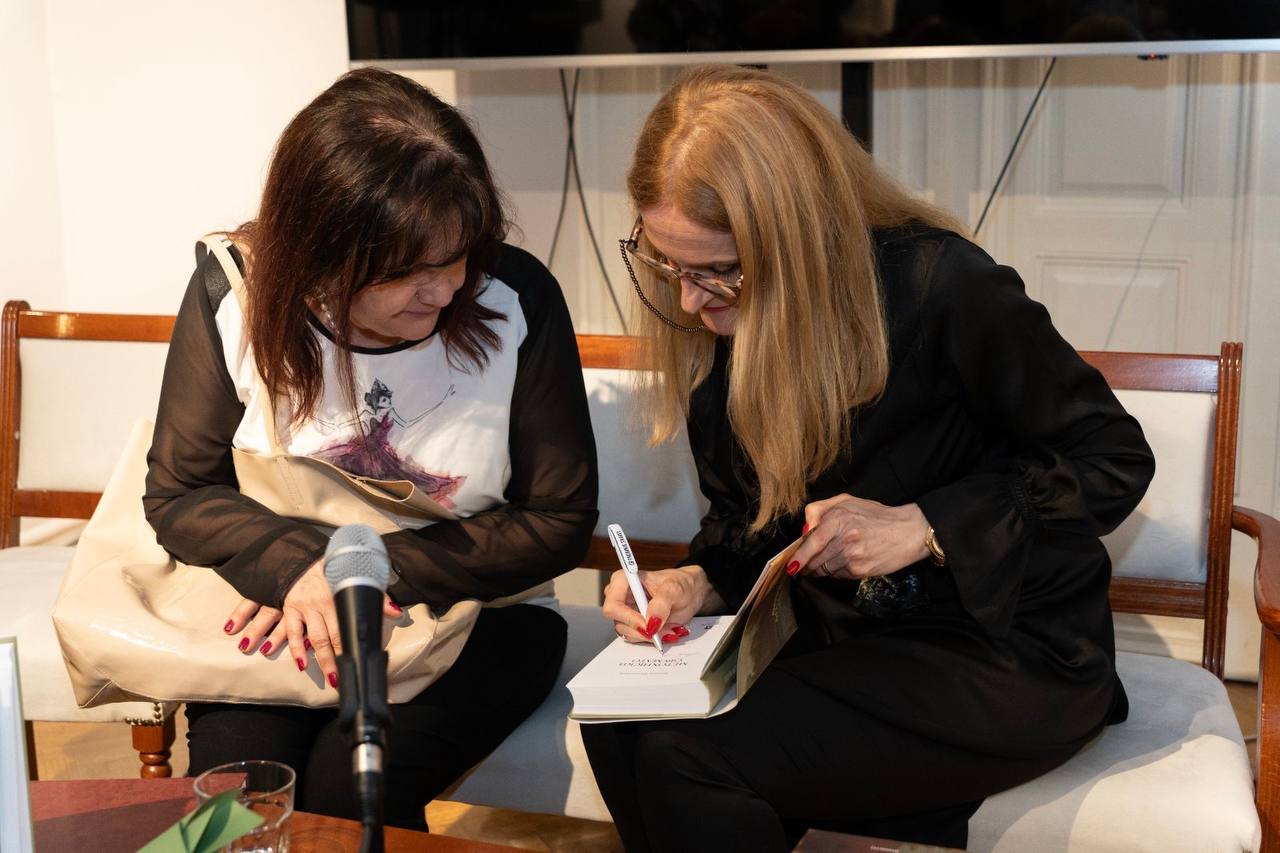
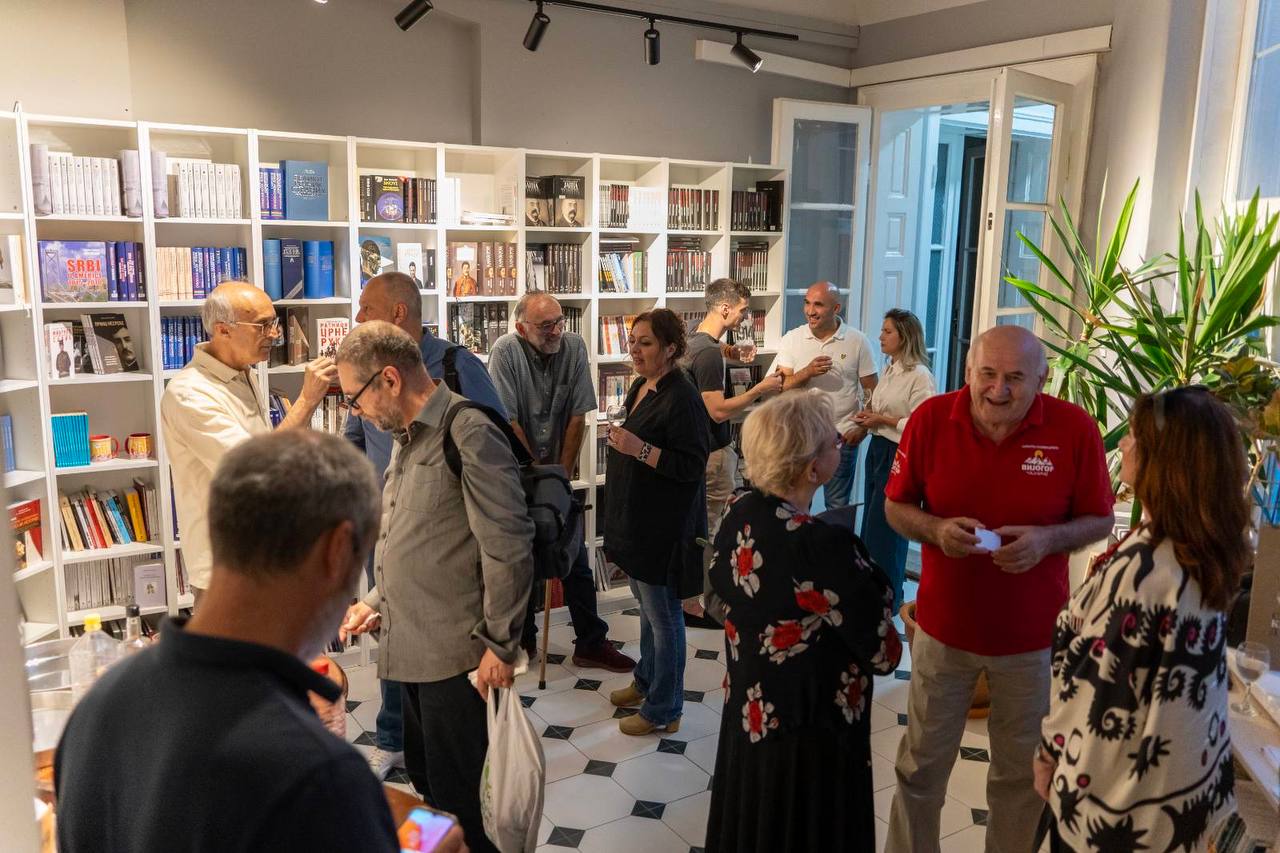
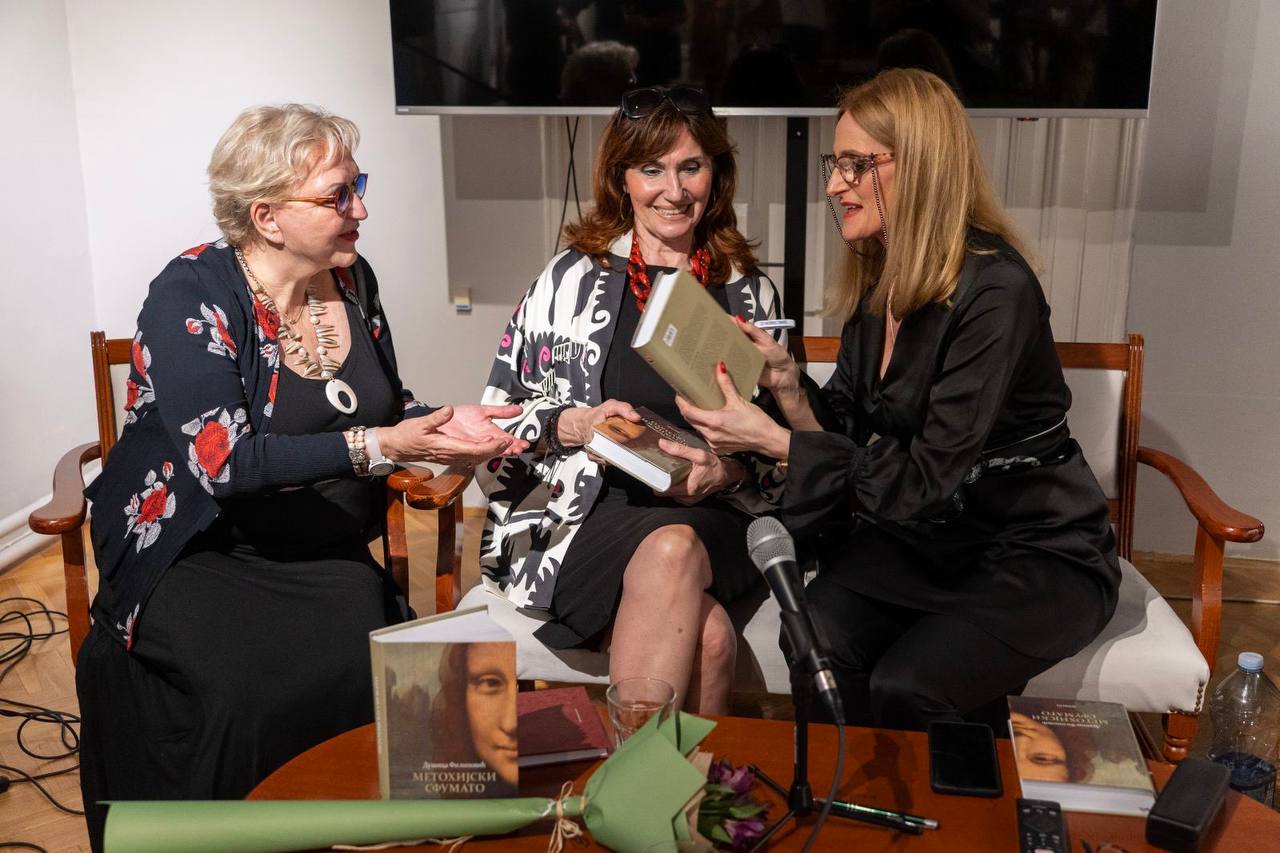
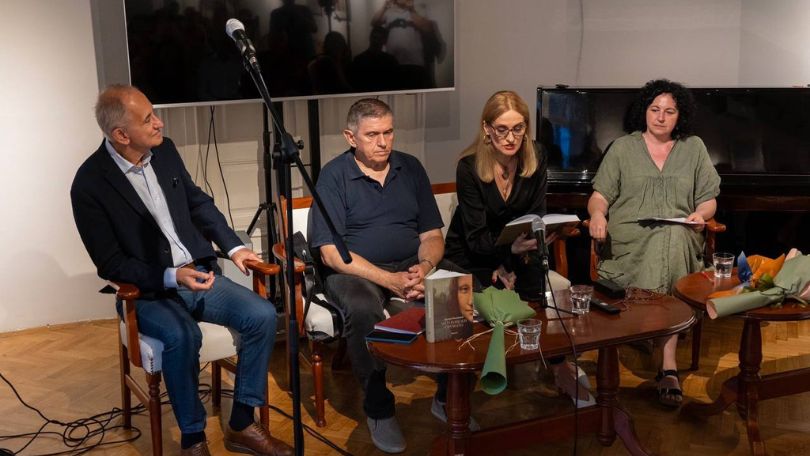
On June 6th, the first presentation of the novel Metohian Sfumato by Dušica Filipović was held at the Prometej Publishing House Gallery in Novi Sad. We supported the publication of this book, recognizing it as a sacred work of exceptional importance to Serbian heritage.
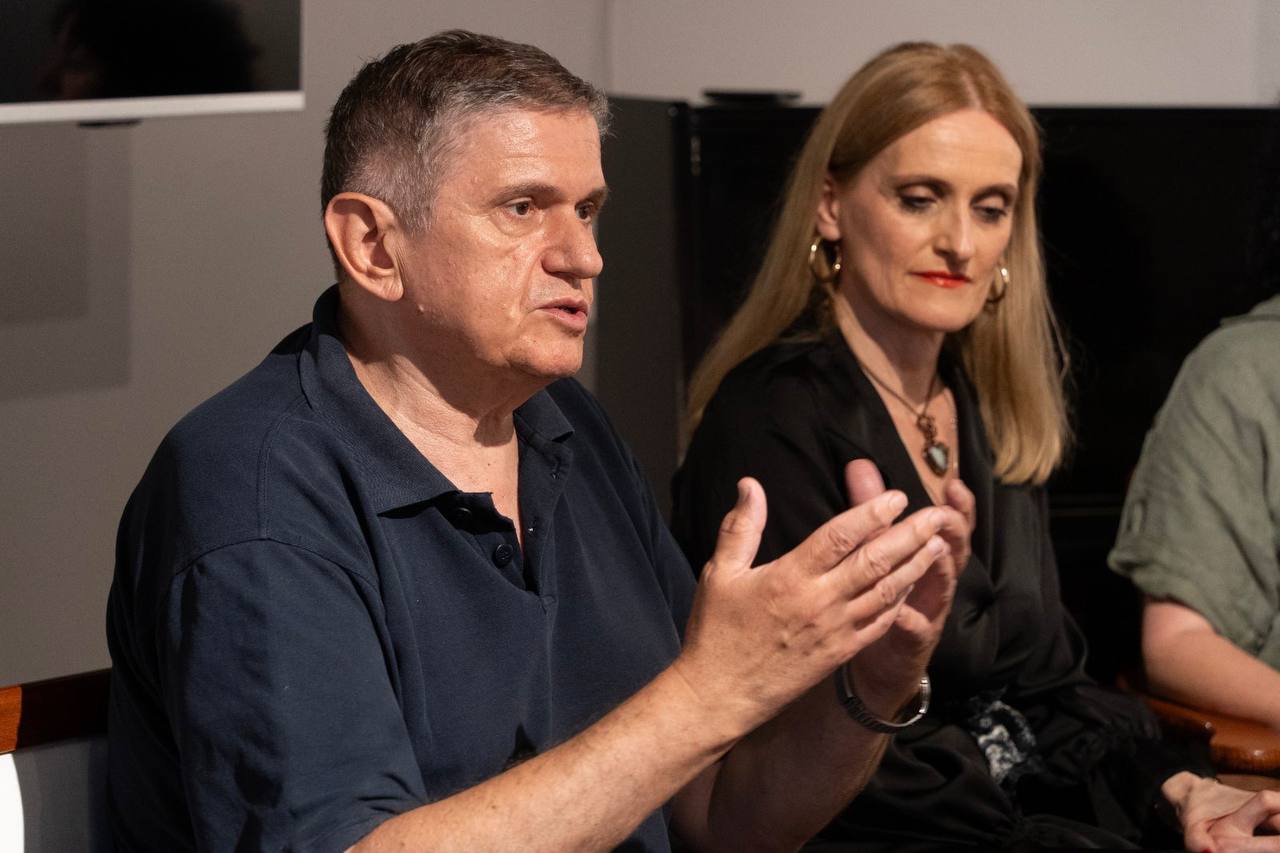
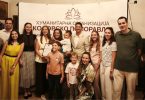
Poet Miroslav Aleksić and Dr. Dragana Rajović from the Institute for Serbian Culture in Priština – Leposavić addressed the audience alongside the author and publishers: Prometej, the Koreni Association, and the Humanitarian Organization Kosovo Pomoravlje.
About the Book
“Through Metohian Sfumato, Dušica Filipović certainly pushes the boundaries of narrative and literary logic. The structure of the text, its composition, length, and cuts compel the reader to assemble and disassemble, to connect and separate, patiently making sense and order—alternating between poetry and tales, kidnapped heads, a child on a swing, and a girl cycling in Novo Brdo. Reminding us that Kosovars have long been resilient walkers, especially Đorđe Vojinčetović, who redeemed the Lipljan Church from the destructive Yashar-Pasha, the author invites readers on a personal, intimate, continuous Walk: a physical and spiritual return to Kosovo and Metohija through song, word, liturgy, and repentance,” explained Professor Rajović during her presentation.”
Although Filipović writes in the era of anthropocentric art, she draws on the Resurrection of Christ. Metohian Sfumato embodies the Kosovo Covenant, representing the Serbian embodiment of the New Testament covenant between God and man.
Myth Over History
Serbs endure thanks to myth, which is more important than history, believes Miroslav Aleksić. Myth is uniquely ours, while history is already being written by artificial intelligence, the poet notes. Metohian Sfumato is, in his words, a book about Kosovo and Metohija, about Crnjanski, Serbian miracles, family, love, history, and the eternal moment. By using “sfumato,” the artistic term denoting blurred portrait backgrounds, Filipović challenges conventional genre ideas.
“This is an educational novel, a lyrical poem about our suffering, about Serbian women who bear it all, documentary prose, a collection of stories, a kind of folk calendar showing who we are. The book pays tribute to the Draganac Monastery and its brotherhood. It depicts the real life of Kosovars, which we rarely see in newspapers or on TV. While media focus on events, here we explore emotions. Filipović provides a new perspective. The book preserves the names of missing and killed Serbs in the great pogrom and recounts the legend of the Great Walker, Đorđe Vojinčetović, who carried seven kilos of nails from Priština to Lipljan in an hour to save the Lipljan Church from Ottoman oppression. He lost teeth but not his heroism. Filipović has written the most striking Serbian book of recent years, fulfilling her duty with unmatched literary beauty,” said Aleksić.
Author’s Words
“Thanks to everyone who helped this book come into the world—from my publisher Zoran Kolundžija and Prometej, with great support from Milan Gutić of the Koreni Association and the Humanitarian Organization Kosovo Pomoravlje, co-publishers. Thanks to my reviewers, poet Miroslav Aleksić and Dragana Rajović, who supported me and beautifully presented the book. Thank you to Dragana for over three decades of friendship and loyalty, to Miroslav for encouragement and wholehearted support to the editors. Thanks to those who gifted me words, whispers, pain, and destinies, reading the manuscript anonymously. And finally, thanks to my husband and children for enduring the decade of work on this book. Most of all, thanks to God, without whose permission nothing under heaven happens.”
—Dušica Filipović, author
Publishers
“Prometej Publishing House is proud to include this title among our publications, especially since it explains the original meaning of the word ‘metohija,’ offering invaluable testimony about Serbian history, culture, and spirituality.”
—Zoran Kolundžija, Prometej
“Together, Prometej, the Koreni Association, and the Humanitarian Organization Kosovo Pomoravlje invited supporters to contribute to this sacred work, leaving a valuable legacy for future generations. Over a hundred names on the final pages send a powerful message: together, we can create great works.”
—Milan Gutić, Koreni Association
“The book Metohian Sfumato and our organization are connected in many ways. While literature and humanitarian work may seem unrelated, our mission is the same. This book and our organization exist not for pride but to serve and give a voice to those silenced between heaven and earth, witnessing life within the barbed wire, light, song, and myth. Humanity is the focal point of Metohian Sfumato, and when we speak of Kosovo and Metohija, it is often the human element we discuss least.”
—Marija Vasić, Humanitarian Organization Kosovo Pomoravlje
At the end of the presentation, the author read an excerpt concluding the novel:
And so, on the fiftieth walking day, after all those who passed here with shadow and grain, song and tears, age and death, along the village road, occasionally thundered some large, decorated carts with a fierce red banner and a black, double-headed eagle. They roar, spilling a dreadful noise resembling music, full of anger and yells. But this eagle is not the Prvovenčani Eagle, nor a despot or Caesar. This eagle is the flag of death going down the wind… across the field.
The heart freezes for a moment, then warms again as summer air fills the chest, melting the ice within. The joyful moment of arrival erases the grim hour of departure.
The joyful hour of arrival is erased by the anguished hour of departure, blackened by anxiety.
It is always time to go to Kosovo.
It is always time to return to Kosovo.
Love always comes back.”
*
Dušica Filipović, Metohian Sfumato